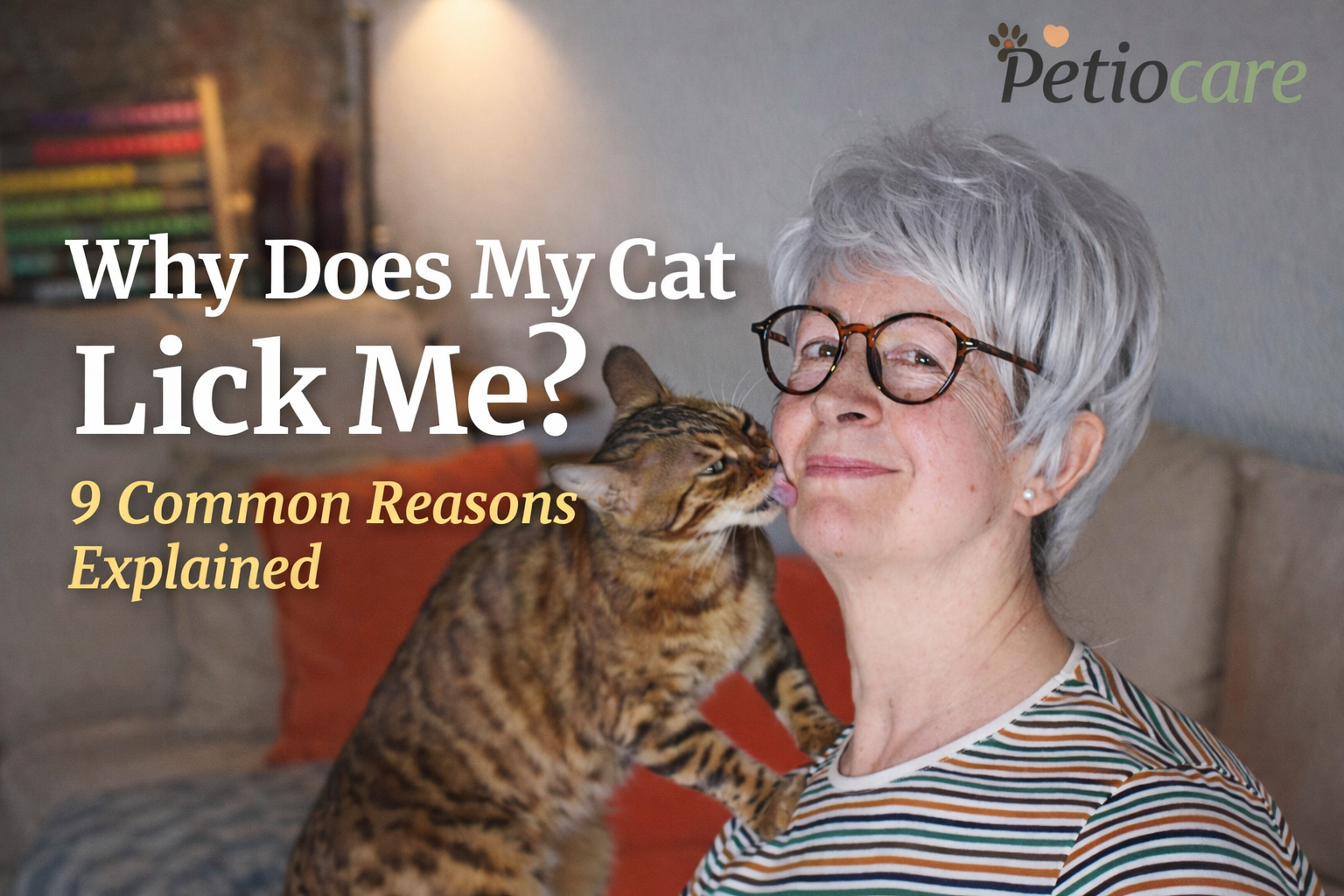
Many pet owners wonder why cats lick their owners and whether this behaviour is a sign of affection or something more complex. When a cat licks you, it can mean a lot of things, like love, grooming, stress, or too much stimulation. If you know why someone is behaving this way, you can better understand how to respond and when the behavior is okay or needs to be looked into.
Cats lick their owners to groom themselves and bond with them. Licking can signify love, comfort, recognizing a smell, or a response to something that bothers them. But licking a lot or aggressively could also be a sign of overstimulation, anxiety, or stress from behavior.
This guide covers the most common causes of behavior problems in cats, including bonding, grooming, stress, and overstimulation. You will also learn when licking is appropriate and when it may require behavioral changes or a visit to the veterinarian.
Is It Normal for Cats to Lick Humans?
Yes, it is normal for cats to lick their owners. Licking is a natural feline behaviour linked to social grooming (allogrooming), which cats use to bond with individuals they trust. Kittens are groomed by their mother from birth, and this behaviour often carries into adulthood as a form of comfort and connection.
When a cat licks a human, it usually indicates familiarity and acceptance rather than dominance. That said, the frequency and intensity of licking are important. Occasional licking is typical, but excessive or forceful licking may suggest overstimulation, anxiety, or a behavioural issue that requires attention.
Why Does My Cat Lick Me So Much?
Understanding the meaning ofexcessive cat licking is important, as constant licking may signal anxiety, boredom, or compulsive behaviour rather than affection. If you’re curious about why my cat licks me so much, it’s usually because they want to bond with me, feel safe, or it’s just something they do. Cats lick people to show that they trust and feel safe around them.
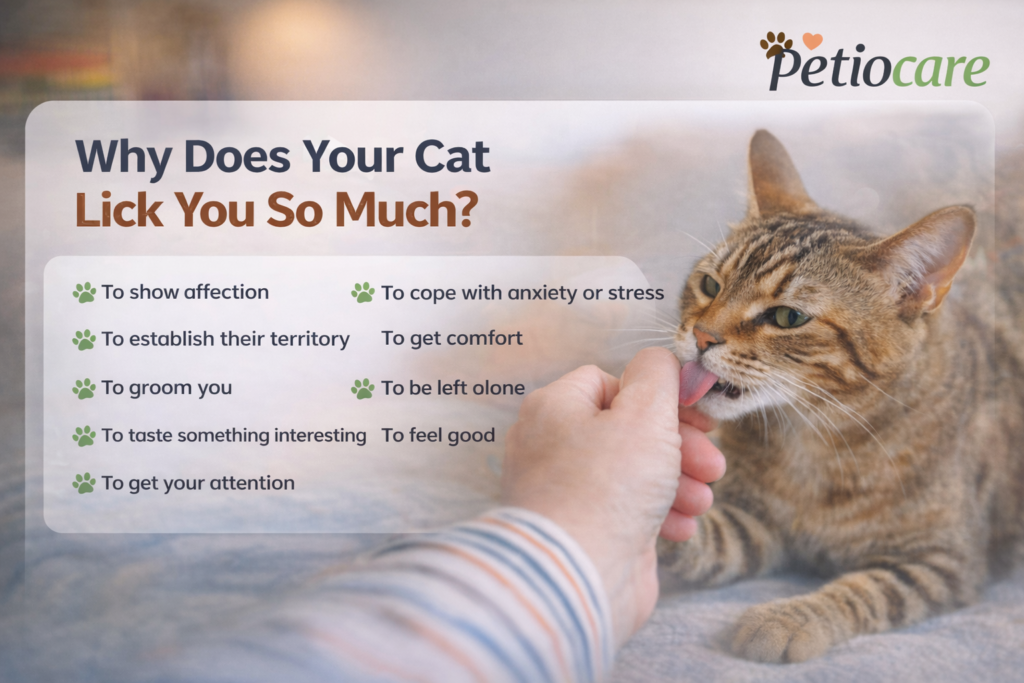
Some common reasons are:
- A strong connection to their owner
- They feel safe and at ease when they are with you.
- Licking as a way to calm or soothe oneself
- A habit learned as a kitten that stays with you into adulthood
Some cats are just more loving by nature than others. If your cat often stays close to you, sleeps near you, or wants to be touched, licking you over and over again is usually a sign of that bond rather than a behavior problem.
Why Does My Cat Lick Me When I Pet Her?
This behavior happens a lot when a cat is enjoying being petted but is getting close to its limit for stimulation. Cats can only handle so much petting before they become uncomfortable. Licking can be a sign that the interaction is getting too much for them.
Signs that you are overstimulated include:
- Flicking, swishing, or suddenly thumping the tail
- Ears that turn sideways or flatten out backward
- Muscle tension or stiffness in the body that comes on suddenly
- Skin that ripples or twitches along the back
- Pupils that are too big or staring hard
- Sudden turns of the head toward your hand
At this point, licking isn’t a sign of affection; it’s a way for your cat to tell you that it needs to stop the interaction before it turns into biting or defensive behavior.
Why Does My Cat Lick Me Then Bite Me?
This is one of the most commonly searched and misunderstood cat behaviours. People often ask why their cat shows licking behaviour and then suddenly bites. The answer is usually that she is overstimulated or playing too roughly.
The interaction often begins with calm licking, but as sensory input increases, the cat reacts instinctively with a bite. These bites are frequently referred to as “love bites” and are not intended to cause harm, but they can still be uncomfortable or painful.
To reduce this behaviour:
- Stop petting as soon as warning signs appear
- Avoid sensitive areas such as the belly, tail base, or hind legs
- Keep petting sessions short and controlled
- Redirect excess energy using toys rather than hands
- Use consistent handling routines to avoid mixed signals
Stopping interaction early helps prevent escalation and teaches your cat that calm behaviour ends attention positively. Consistency over time can significantly reduce lick-then-bite responses.
Why Does My Cat Lick Me and Not My Husband?
If your cat licks you but not your partner, it’s usually because they like you better, not because they don’t like your partner. Cats get closer to people who seem familiar, reliable, and rewarding to them.
There are a few reasons why cats might pick one person over another:
- More familiar smells
- Who feeds, plays with, or spends more time with them
- Who stays calm and consistent in response to their behavior
- Hormones and pheromones that are different in nature
If you’re wondering why your cat licks you rather than your husband, it’s probably because your cat sees you as more comforting and safe, which makes you their favorite person to bond with.
Why Does My Cat Lick Me After I Shower?
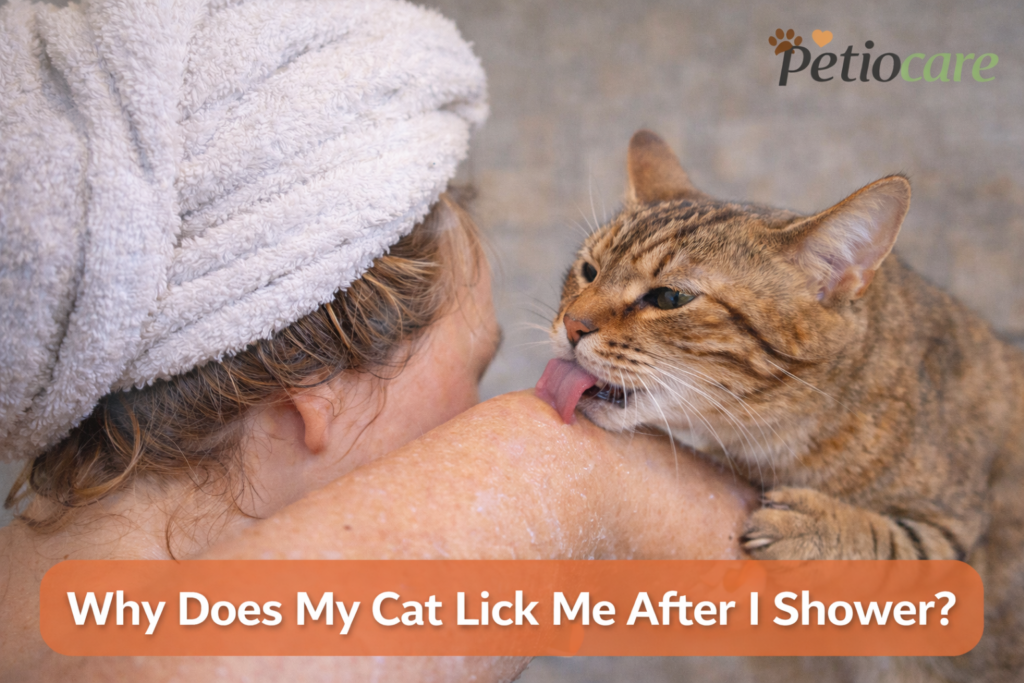
Cats use their sense of smell a lot to tell people apart, and taking a shower temporarily removes your natural smell. Your cat may lick you when you come back smelling like soap, shampoo, or body products because of the sudden change in smell.
Cats may lick after a shower to:
- Investigate unfamiliar or strong scents
- Remark you with their own scent
- Groom salt residue left on the skin
This explains why my cat licks me after I shower. The behavior is caused by the ability to smell and the need to groom, not by love or anger.
Why Does My Cat Lick Me Constantly?
If your cat licks you a lot or for a long time, you should look beyond normal bonding behavior. If your cat licks you all the time, it could be a sign that they’re using the behavior to deal with changes in their emotions or surroundings.
Constant licking may be linked to:
- Separation anxiety or over-attachment
- Stress caused by routine or environmental changes
- Boredom or lack of mental stimulation
- Compulsive or repetitive behaviour patterns
Events such as moving house, introducing new pets, or changes in daily schedules, which are common in UK and US households, can increase stress and trigger excessive licking.
Why Does My Cat Aggressively Lick Me?
When licking becomes forceful, repetitive, or uncomfortable, it is often no longer a sign of affection. Aggressive licking can indicate emotional distress or an underlying issue that requires attention.
Possible causes of aggressive licking include:
- Anxiety or elevated stress levels
- Frustration or redirected behaviour
- Compulsive grooming patterns
- Underlying medical conditions, such as skin allergies, pain, or neurological issues
If your pet’s aggressive licking is new, sudden, or getting worse, you should see a vet or a qualified animal behaviorist to rule out health problems.
Should I Stop My Cat from Licking Me?
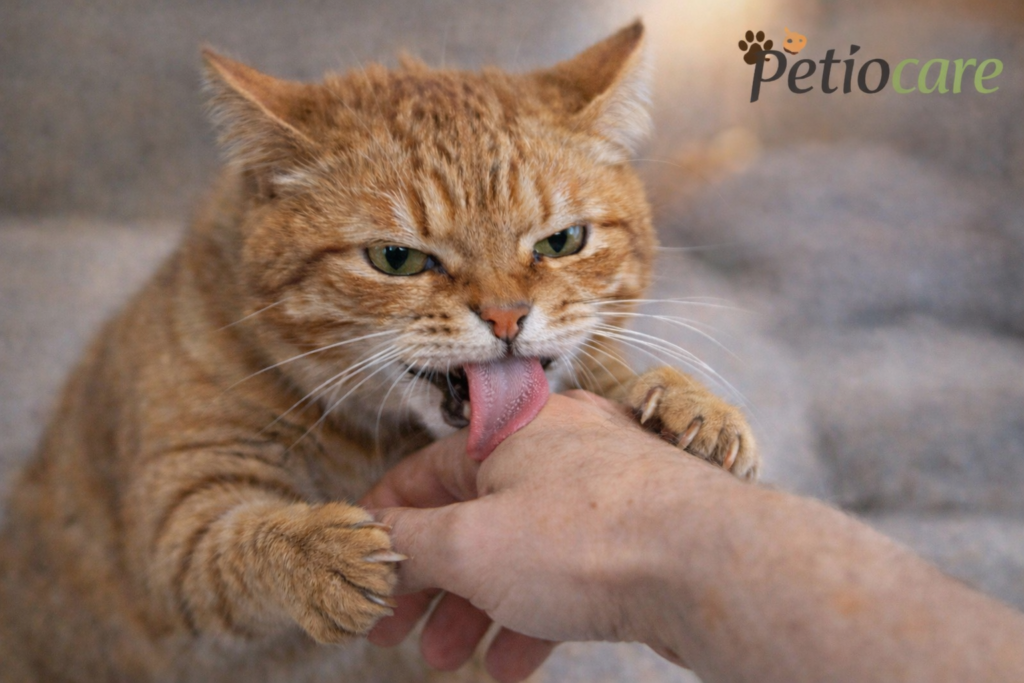
It’s normal and usually not harmful to lick occasionally. You only need to step in when the behavior gets out of hand, makes you uncomfortable, or is related to stress.
You might need to step in if:
- The licking is always there, or it is too much.
- It often makes people bite.
- It makes the skin feel uncomfortable or irritated.
- The behavior seems to be caused by stress or anxiety.
Here are some gentle and effective ways to deal with licking:
- Stopping petting sessions before they get too much
- Using toys or other fun activities to get someone’s attention back
- Avoiding punishment, which can make things worse and increase stress
If you always respond in a calm and predictable way, your dog will lick less over time. The goal is not to stop natural behavior, but to stop responses caused by stress or too much stimulation from becoming a habit.
When Cat Licking Becomes a Health Concern
Licking from time to time is normal, but sudden or excessive changes in this behavior could mean a health or behavioral problem. Don’t ignore patterns like licking too much or being more aggressive. In these cases, professional evaluation is recommended.
Seek professional advice if:
- Get professional help if the behavior changes suddenly or for no clear reason.
- Licking becomes a habit or an obsession.
- Aggression goes up when licking happens.
- Your cat looks like it hurts, is in pain, or is angry.
A veterinarian or trained behaviorist can help identify medical or anxiety-related problems by looking at the animal early on. Taking care of the problem early lowers the risk of picking up bad habits or health problems that don’t get treated.
Final Thoughts: What Your Cat Is Really Trying to Tell You
So, why does my cat lick me? In most cases, this behaviour reflects trust, familiarity, and social bonding. Cats may lick during petting, after scent changes such as showering, or toward one preferred person to maintain a connection.
Recognising when licking is normal versus stress-related allows you to respond appropriately. Understanding these signals helps maintain a healthy interaction and supports a positive, comfortable relationship between you and your cat.
Cats lick faces to groom, bond, and mark scent. It’s usually affectionate, but can also be triggered by salty skin or facial products.
Generally, yes, but avoid open wounds and wash skin if irritation occurs.
Yes. Licking can be a self-soothing behaviour during stress or routine changes.
Cats are most active in the evening and may seek comfort or attention during quiet moments.