It’s scary to see your dog limp, especially if it happens out of the blue and you don’t know why. Limping is never something to ignore, even if your dog isn’t crying, is favoring one leg, or isn’t showing any obvious signs of pain.
We’ll explain what dog limping really means, the most common causes, when a limp could mean a serious problem, and safe things you can do at home in this guide. If you know what these signs mean, you’ll be better able to help your dog heal quickly and avoid problems in the future.
What does it mean for a dog to limp?
When a dog limps, also known as canine limping or lameness, it means that it doesn’t want to bear weight on one or more legs. This can happen all at once or over time, and it could mean anything from a small paw problem to a more serious underlying health issue.
A dog that is limping might:
- Prefer one leg
- Walk in a way that isn’t straight
- While standing, hold up a paw
- Struggle to walk, run, or jump
A little limp usually means that the leg, paw, joint, or muscle hurts, is uncomfortable, or is weak. Observing how your dog moves and noting any changes in behavior can help you determine when to seek veterinary care.
Why is my dog limping? (Reasons That Happen a Lot)
There are many reasons why a dog might limp, from minor, short-term problems to more serious ones that need to be looked at by a vet. Knowing the most common causes can help you determine when to seek professional help and when to handle things at home.
- Injuries and trauma
- Strains or sprains
- Tears in muscles
- Bones that are broken or cracked
- Tears in ligaments, like ACL or CCL tears
These kinds of injuries often occur after running, jumping, slipping, or playing roughly. Taking care of the problem right away can stop it from getting worse and help your dog recover faster.
Problems with the Paw
- Thorns, glass, or stones stuck in the paw
- Nails that are broken or torn
- Burns from hot pavement
- Scrapes or cuts
If your dog starts limping out of the blue, always check their paws carefully. Even small things can hurt them a lot and change the way they walk.
Problems with bones and joints
- Arthritis (a common problem in older dogs)
- Hip dysplasia
- Luxating patella (the kneecap slips out of place)
These problems could make you limp that comes and goes or gets worse over time. Finding and treating the problem early can help with pain and movement.
Insect bites and infections
- Swelling from insect bites
- Wounds or abscesses
- Tick-borne diseases like Lyme disease
It’s important to keep an eye out for swelling, redness, or pain because even small infections or bites can make a dog limp. Veterinary evaluation ensures proper treatment.
Dog Suddenly Starts Limping – What Does It Mean?

When a dog suddenly starts limping, it’s usually because of a sudden problem, like a small injury, an irritated paw, or a strained muscle. Watching how your dog walks and acts can help you figure out if the problem is temporary or more serious.
- Mild limp: Dog still walks but favors the leg
- Severe limp: The dog won’t put any weight on the leg.
If your dog is limping a little but has no other symptoms, it’s usually fine to watch them for 24 to 48 hours while they rest. But if the limp gets worse, doesn’t go away, or is accompanied by other worrying signs, the best thing to do is call your vet.
Dog Suddenly Limping in Back Leg: Common Reasons
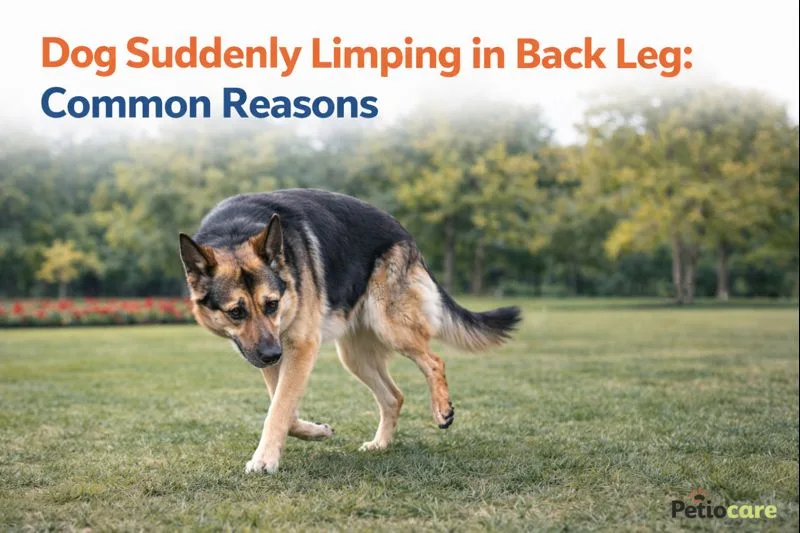
Back-leg limping can happen out of the blue, and it happens a lot in larger or more active breeds. If you watch your dog move closely, you can tell whether the limp is mild or severe. However, if the limp comes on suddenly, you should see a vet.
Back-leg limping is especially common and can be caused by:
- CCL (ACL) tear—very common in large or active breeds
- Problems with the hips, like hip dysplasia or arthritis
- Muscle strain – Strain in the muscles from working too hard
If your dog suddenly starts limping on a back leg and has trouble standing, jumping, or walking normally, you should take him to the vet right away to find out what’s wrong and stop him from getting hurt again.
Why Is My Dog Limping Front Leg?
There are many reasons why a dog might limp on its front legs. Because dogs carry a lot of weight on their front legs, even small problems can make it hard for them to move. Observing how your dog walks and moves can help identify whether the problem is minor or requires veterinary attention.
Front-leg limping may be related to:
- Shoulder injuries may be the cause of limping in the front leg.
- Elbow or carpal (wrist) problems
Even minor injuries or irritation in the front legs can cause a dog to limp, and getting them checked out by a vet as soon as possible ensures they get the right care and heal faster.
My Dog Is Limping but Not Crying—Is My Dog Still in Pain?
Yes, dogs often hide their pain, even when they are in pain. A dog can limp without making any noise, whining, or reacting when touched. This doesn’t mean your dog isn’t hurting; a lot of the time, the pain is inside, gradual, or not very noticeable.
Some signs of hidden pain are:
- Limping without making any noise
- Slower movement
- Less interest in play, stiffness after rest
- Stiffness after rest
It’s important to keep a close eye on these small signs, even if your dog seems calm. Talking to your vet can help you figure out why your dog is limping and make sure they get the right care and relief.
Should I be worried if my dog limps after lying down?
If your dog limps after resting but gets better after walking, it’s usually not a serious injury but rather mild pain or stiffness. Watching how your dog moves can help you decide whether this is a small problem or one that needs to be looked at by a vet.
This could be because of:
- Stiffness in the joints
- Arthritis at an early stage
- Tightness in the muscles
This “warm-up limp” is common in older dogs, but younger dogs with joint problems can also get it. If the limp happens more often, lasts longer, or gets worse over time, the best thing to do is to see your vet.

How to Treat a Limping Dog at Home (Mild Cases Only)
If your dog is only limping a little, you can help them get better at home by taking some careful steps. These steps are only for minor injuries or short-term pain, and you should never use them instead of going to the vet if the symptoms get worse.
You could try:
- Rest: No stairs, running, or jumping
- Check the paws: Check for cuts, swelling, or anything.
- Cold or heat packs: Only if your vet says so
- Only bathroom breaks on a leash
Additional safe steps you can add:
- Provide a soft resting area: A padded bed or blanket can reduce pressure on sore joints and muscles
- Limit slippery surfaces: Keep your dog off slick floors to prevent further strain or falls
- Monitor changes closely: Watch for swelling, worsening limping, or behavior changes over the next 24–48 hours
Home care is not a good idea for dogs that are limping badly, have a fever, or won’t walk. Always keep a close eye on your dog, and if there is no improvement after a few days, call your vet to ensure they are getting the right care.
When to Be Concerned About Your Dog Limping
If your dog is limping, you should call your vet right away because it could be a sign of a minor injury or a serious health problem. Paying attention early can stop long-term damage and make sure your dog gets the care it needs.
If your dog does any of the following, it needs to be seen right away:
- Has been limping for more than 24 to 48 hours
- Shows swelling, fever, or bleeding
- Crying, whining, or looking upset
- Won’t put weight on a leg
- Symptoms are getting worse
It’s always better to have a professional look at your dog if you’re not sure. Early treatment can help your pet get better faster and stay healthy and comfortable.
Can I Give My Dog Aspirin for a Limp?
No, you should never give your dog aspirin without first getting permission from a vet. Even small amounts of human painkillers can be very harmful or even deadly for dogs. It’s important to know that what works for people isn’t always safe for pets.
Aspirin may make:
- Ulcers in the stomach
- Bleeding inside
- Damage to the kidneys
Given these big risks, it’s always best to talk to your vet first. Your vet can suggest safe pain relief or other treatments for your dog that won’t hurt them while they heal.
My Puppy Is Limping – Is It Different?
Yes. When puppies limp, you need to be extra careful because their bones, joints, and muscles are still growing and are more likely to get hurt. Sometimes, even a little limping in a young dog can mean that there is a problem that needs to be fixed.
Some possible causes are:
- Growth plate injuries
- Minor trauma during play
- Congenital joint issues
Injuries can affect a puppy’s long-term growth if they aren’t treated right away because their bones are still growing. It is very important to get your pet to the vet as soon as possible to make sure they heal properly and avoid future mobility issues.
Vet-Informed Advice You Can Trust
This article is meant to educate readers and is based on real-life experiences with pet care, sources reviewed by veterinarians, and the best ways to keep dogs healthy right now.
This guide is meant to help dog owners determine why their dog is limping, but it is not a replacement for a professional veterinarian’s diagnosis or treatment. Symptoms can vary from dog to dog.
Always see a licensed veterinarian if your dog is limping, in pain, or getting worse. They will be able to give you an accurate diagnosis and safe treatment options.
conclusion
If your dog is limping, it’s a clear sign that something is wrong, whether it’s a small problem with their paw, a muscle strain, or a more serious problem with their joints or ligaments. If you pay close attention to how your dog moves, acts, and feels, you can catch problems early and stop them from getting worse.
Always ask your vet if you’re not sure. Getting help early can have a big impact on your dog’s health and recovery. You need to be able to see the signs, act quickly, and do the right things to keep your dog healthy and pain-free.
If limping lasts more than 24–48 hours or worsens, see a vet.
Some mild cases can improve with rest, but many require treatment.
Only short, leash-controlled bathroom walks—no exercise.
Yes. Even if your dog doesn’t cry, limping usually indicates discomfort.