Dog licking paws is a common behavior that many dog owners notice. While occasional paw licking is normal, excessive paw licking in dogs can be a sign of allergies, pain, or anxiety. It’s normal for dogs to lick their paws from time to time as part of their grooming routine, but if they do it too much or chew on their paws, it could be a sign of a health or behavioral problem.
Allergies, injuries, infections, or even anxiety can make dogs lick their paws. It’s important to know why the licking is happening to avoid problems such as infections, sores, or long-term irritation.
In this article, we’ll talk about the most common reasons why dogs lick their paws, how to tell if they’re doing it too much, home remedies that work, ways to stop it from happening, and when to take your dog to the vet.
What Does It Mean When a Dog Licks Its Paws?
Dog owners are often worried and confused about why their dog licks his paws so frequently. You don’t need to worry when your dog licks its paws. Sometimes it’s just a normal part of cleaning up after a walk or grooming. But licking a lot or in a certain way can also mean that something is wrong and needs to be fixed.
Grooming normally vs. licking too much
Dogs lick their paws to remove dirt, mud, or allergens. Dogs lick themselves from time to time, especially after going for a walk or playing outside.
Excessive paw licking in dogs is repetitive and usually affects one paw, causing redness, swelling, or hair loss.
Lick granuloma (chronic licking of the paws)
A lick granuloma, also called acral lick dermatitis, happens when a dog licks the same spot over and over, causing hairless, inflamed patches. Chronic licking can help soothe the animal, but it often needs to be treated by a vet to avoid infection.
Emotional reasons: Boredom and anxiety
When dogs are stressed, anxious, or bored, they may chew their paws to calm down. For instance, dogs left alone for long periods or suddenly moved to a different place may start licking things compulsively.
Physical Reasons: Allergies, injuries, or irritation
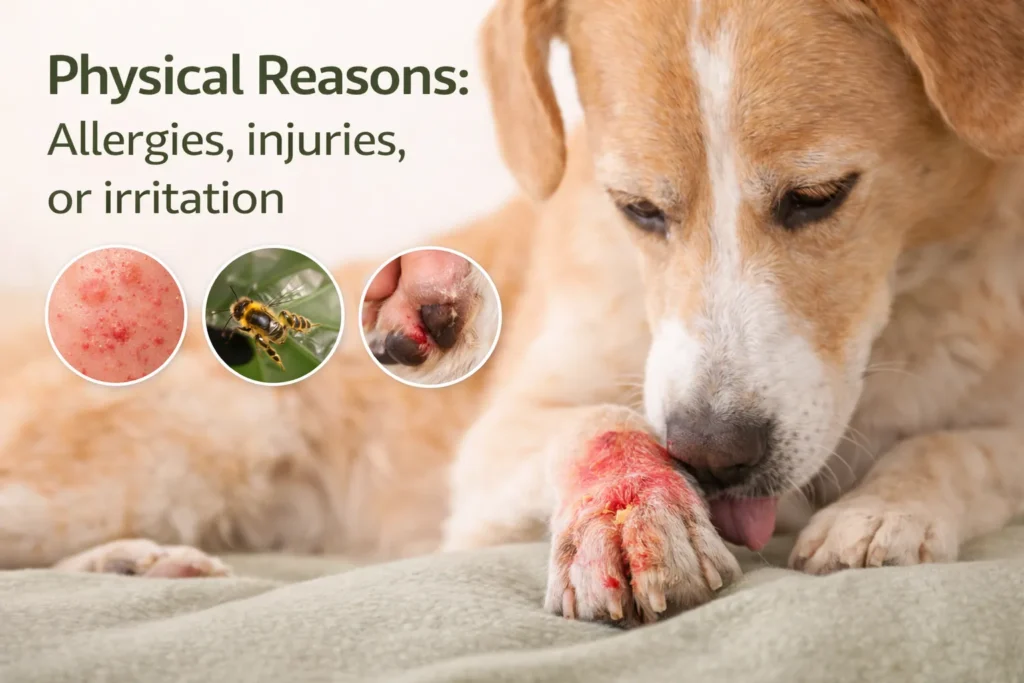
When a dog’s paw hurts or is uncomfortable, it may lick or chew on it. There are several physical reasons this could happen, from small injuries to allergies.
Some common physical causes are:
- Small cuts, scrapes, or thorns
- Paw pads that are sore from hot surfaces or chemicals
- Food, pollen, or flea bites can all cause allergic reactions.
These problems can make your dog feel itchy or sore, which can make them lick or chew their paws. If not dealt with, this behavior can get worse over time and even lead to infection. Paying attention early can help keep your dog comfortable and prevent more serious problems.
Common Causes of Dog Licking or Chewing Their Paws
The first step in stopping a dog from chewing on paws is to understand the reason behind it. Dogs often lick or chew their paws because something is bothering them, and allergies are one of the most common causes of this behavior.
Why do dogs lick or chew their paws? Allergies
If your dog has allergies, their paws may itch and hurt, which can make them lick or chew on them a lot. A dog constantly licking its paws can be a sign of allergies, pain, or anxiety.
Some common types are:
- Environmental: pollen, dust, mold, or chemicals used to clean.
- Food allergies: Licking can occur when you eat proteins like chicken, beef, or grains.
- Flea allergy dermatitis: Just one flea bite can make your dog’s paws itch a lot.
These allergies can make your dog feel like they are always angry. If you don’t take care of them, they could get sores, redness, or even infections from licking too much. Finding out what they are allergic to and how to deal with it is the most important thing for keeping their paws healthy and comfortable.
Skin problems and infections
Sometimes, dogs chewing their feet can cause skin problems or make them worse. It can make you feel bad if you don’t take care of it. Licking the same spot over and over can make it easier for infections to occur or worsen skin problems.
Here are some common skin issues:
- Infections that happen because of yeast or bacteria: These can make your skin red, puffy, and smell bad.
- Dermatitis and hot spots: Licking all the time can make patches red and sore.
These skin problems can get worse and hurt if they aren’t treated, and they may need to see a vet. You can avoid more serious problems by keeping your dog’s paws clean and watching for early signs.
Pain and injuries
Dogs often lick or chew on their paws because they are in pain. Even a little bit of pain can make you lick over and over again.
- Cuts, thorns, splinters, or nails that grow into the skin
- Burns on the paw pads from hot asphalt or de-icing salts
- Arthritis or pain in the joints of older dogs
These problems can make your dog hurt and cause him to lick a lot, which could make the injury worse or lead to an infection. Taking care of your dog right away can help them heal faster and feel less pain.
Parasites
Fleas, ticks, and mites that live outside can make your dog’s paws very itchy. Even a few bugs can make you lick too much.
- Flea dirt: small black dots on the skin or fur.
- Ticks that burrow: they are often found between the toes
It is important to treat and stop parasites from getting into your dog so that they are comfortable and don’t get sick or irritated. Regular checkups and preventatives that your vet suggests are very important.
Behavioral Reasons Why Dogs Lick Their Paws
There are times when licking paws is not a medical condition; it is a behavior. Dogs may start licking things because they are bored or stressed.
- Stress or anxiety from being alone or changes in the environment
- Obsessive-compulsive disorder (OCD) causes repeated licking
- Behaviors that are boring or want attention
You can control behavioral licking with enrichment, training, and in some cases, medication or advice from a vet for anxiety.
Signs That Your Dog’s Paw Licking Is Excessive
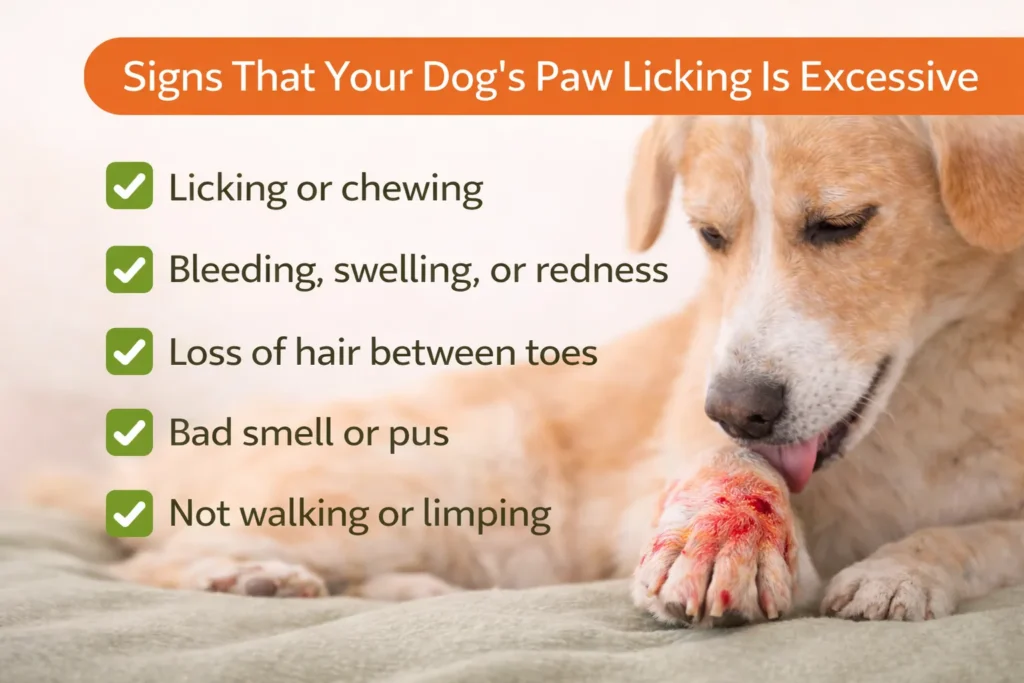
Excessive paw licking in dogs isn’t always bad, but it can sometimes mean something is wrong. You should keep an eye out for signs that your dog’s licking has gotten out of hand.
- Licking or chewing a lot or all the time
- Bleeding, swelling, or redness
- Loss of hair between toes
- Bad smell or pus
- Not walking or limping
It’s best to see a vet right away if you see any of these warning signs. If you act quickly, you can stop infections and other problems from happening, keeping your dog healthy and happy.
How to Stop a Dog from Licking or Chewing Their Paws (Home Remedies)
If your dog is licking its paws a little bit, there are several safe home remedies you can try. These simple steps can help ease the pain and calm their paws.
- Hygiene and Cleaning: To remove dirt, allergens, and other debris, clean your dog’s paws with warm water or wipes that are safe for dogs regularly.
- Moisturizers and balms for your paws: To soothe dry or cracked paw pads and keep your pet from licking them more, use coconut oil or pet-safe paw balms.
- Distraction & Enrichment: To keep them from getting bored and licking out of stress, give them toys, mental stimulation, and walks.
- Protective Boots or Socks: When you take your dog for a walk outside, dog boots or socks keep their paws safe from hot surfaces, chemicals, and allergens.
- Natural Remedies: Oatmeal baths can soothe irritated skin, and coconut oil can protect and moisturize paw pads.
These remedies may help, but if your pet keeps licking or licking a lot, you should take them to the vet. Taking care of your dog early on will keep them comfortable and help them avoid infections and other problems.
Note: If licking doesn’t stop even after trying home remedies, see a vet for a professional diagnosis.
When to Go to the Vet
Paw licking can sometimes be more than just a habit, and you may need to see a vet. A veterinarian can help figure out what’s wrong with your dog if your dog has persistent or severe symptoms.
- Persistent licking for several days
- Bleeding, swelling, or pus around the paws
- Pain or limping while walking
- No improvement with home care
Your veterinarian may recommend several treatments depending on the cause of your dog’s paw licking.
- Antibiotics for bacterial infections
- Anti-inflammatory medications for arthritis or pain
- Allergy testing and specialized diets
- Behavior therapy for compulsive licking
Getting your dog to the vet right away can keep problems from happening and make sure they get the right care to stay healthy and comfortable.
Preventing Paw Licking in Dogs
It’s always best to stop paw problems before they happen. You can keep your dog’s paws healthy and stop them from licking or chewing by following a few simple steps.
- Grooming and cutting nails: Keeps paws clean regularly and lessens irritation that can cause licking happen.
- Flea & tick prevention: To avoid bites and allergic reactions, use medications that your vet has approved.
- Healthy diet & weight management: Maintaining a healthy weight reduces stress on your joints and paw pads.
- Keep your mind busy and lower your stress: Make sure your dog stays busy so they don’t get bored or anxious and start licking things.
- Monitor environment for allergens or irritants: Watch out for pollen, dust, chemicals, or other things that could harm your dog’s paws.
If you always do these things, you can keep your dog from licking its paws too much and ensure it is happy, healthy, and comfortable.
Special Cases
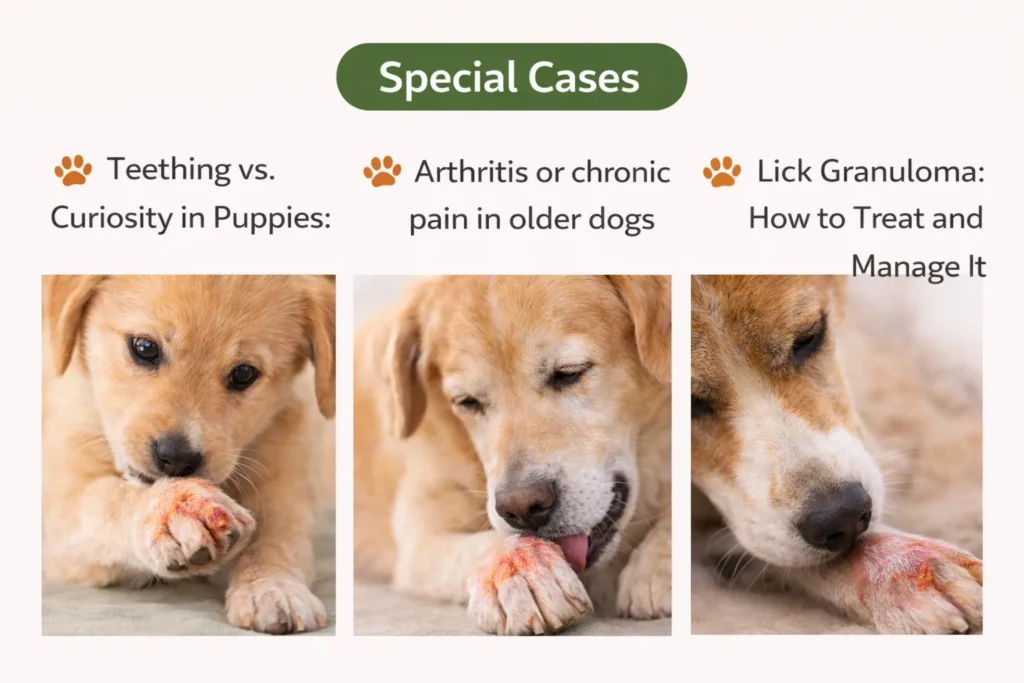
Some dogs may be more likely to lick their paws because they are older or have certain health problems. If you know how to handle these situations, you can keep your dog comfortable and safe.
- Teething vs. Curiosity in Puppies:
Puppies often lick or chew on their paws while they are exploring or when they are teething. Watch how they act and give them safe chew toys instead of punishing them. - Arthritis or chronic pain in older dogs
Older dogs might lick their paws because their joints hurt or they have arthritis. Veterinary care or pain management can help ease the pain and stop the licking. - Lick Granuloma: How to Treat and Manage It
Licking a lot can cause lick granulomas, which are patches of skin that are hairless and inflamed. Medications, behavioral therapy, and steps to protect against more irritation may all be part of the treatment.
By knowing about these special cases, you can give your dog the right care and keep him or her healthy, no matter how old he or she is or what other health problems he or she may have.
Conclusion
Too much licking of the paws by a dog can mean that it has allergies, an infection, pain, or behavioral problems. Keeping an eye on your dog, giving them home remedies, and going to the vet when necessary can all help keep your dog healthy and avoid problems.
It’s important to move quickly.
You can help your dog feel better and stop licking their paws by identifying the cause, fixing any problems that are causing it, and providing regular care.
Constant licking may indicate allergies, infections, pain, or anxiety. Monitor for redness, swelling, or odor, and consult a vet if persistent.
Clean paws, use paw balms, provide toys and enrichment, consider protective boots, and address underlying medical or behavioral issues.