

Many cat owners assume that cats stop growing at exactly one year old. This belief sounds simple, but it’s not fully accurate. Cat growth is not a single finish line. It happens in layers, and each layer ends at a different time.
Some cats stop getting taller early, while others continue gaining muscle, bone density, or body mass long after their first birthday. Gender, breed, genetics, and nutrition all play a role in growth. That’s why one cat may look fully grown at 10 months, while another still feels “unfinished” at two years.
In this guide, we will discuss when cats stop growing, what growth really means, and how age, gender, and breed affect a cat’s final size, so you can understand your cat, not just averages.
What Does “Stop Growing” Really Mean in Cats?
Before talking about timelines, it’s important to define growth properly because many cat owners misunderstand what“fully grown” actually means in real life and often confuse physical maturity with visible size alone.
When people ask about a cat’s growth in size, they usually mean height or length. But growth includes much more than that:
- Skeletal growth (bone length and structure)
- Muscle development
- Body weight and density
- Chest width and frame filling
- Internal organ maturity
A cat may stop getting taller but still grow heavier, stronger, and broader as its body continues refining and strengthening internally. This is why many cats look adult early but continue to change physically for months or even years before reaching full maturity.
The General Growth Timeline of Cats
Every cat is different, but most of them develop in the same way because of their genes, diet, and health in the early years.
Knowing these stages helps you to set realistic goals and stops you from worrying too much about normal growth changes.
Birth to 6 Months: Rapid Growth Stage
Compared to when they were kittens, growth slows down, but cats are still clearly getting bigger. Muscle development begins, and the body’s proportions begin to even out.
During this stage, growth can appear dramatic from week to week, which is why proper nutrition is especially important.
6 to 12 Months: Slowing but Visible Growth
Growth slows compared to kittenhood, but cats are still clearly getting bigger. Muscles begin forming, and body proportions start balancing out.
Many cats also start looking more “adult” during this phase, even though development is not yet complete.
12 to 24 Months: Subtle Growth Phase
This is where confusion happens. Most cats look grown, but internally, they’re still developing. Muscles strengthen, bones harden, and the chest widens.
Changes during this stage are gradual, which makes ongoing growth harder to notice visually.
This phase answers a big question many owners ask: when do cats stop growing in size?
For many cats, visible size growth ends around 12 months, but physical maturity continues beyond that.
When Do Male Cats Stop Growing?
Male cats tend to grow bigger and longer than female cats, and their growth pattern often lasts longer as well. Hormones, especially testosterone, have a big effect on how much muscle and bone a cat has and how their body is shaped overall. This is why male cats often look bigger and heavier as they get older.
Most male cats typically follow this growth pattern:
- Reach full height between 12–15 months
- Continue filling out in muscle and body mass until 18–24 months
- Develop broader chests and stronger frames during late growth stages
If you neuter a male cat early, the growth plates may close a little later than usual. This can help the cat get a little taller, but it usually makes them leaner instead of bigger.
Most kids stop growing taller around the age of one, but it can take up to two years for them to reach full physical maturity, which includes building muscle and getting stronger.
When Do Female Cats Stop Growing?
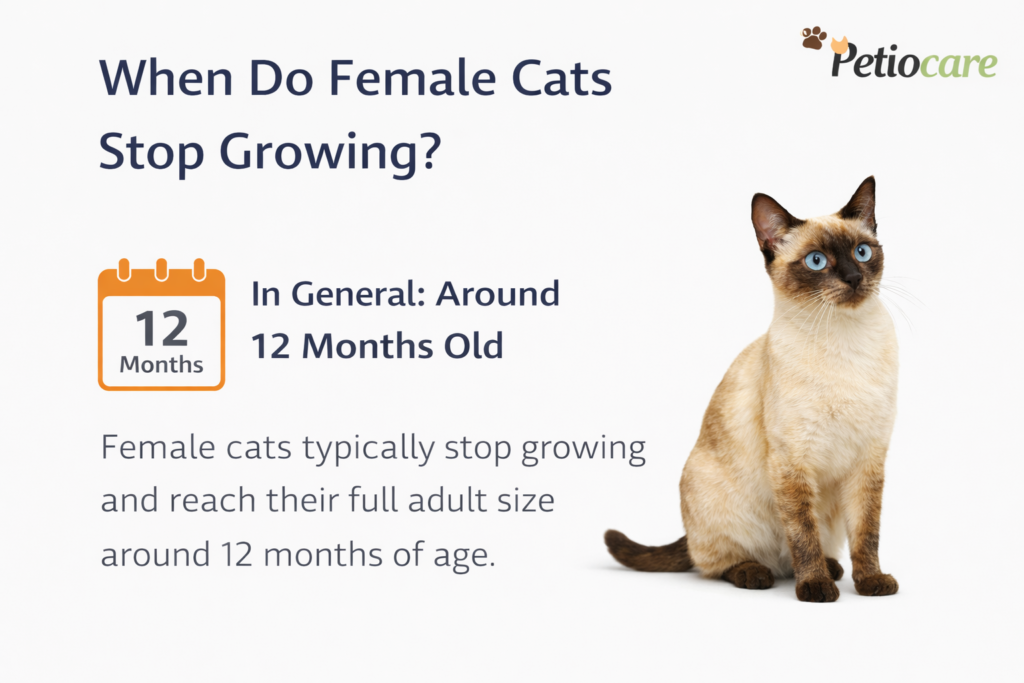
In general, female cats grow up faster than male cats and often reach their full size sooner. Their bones tend to grow faster, and their overall frame is usually smaller, which means that you can see them grow faster than male cats.
Most female cats follow this general growth pattern:
- Finish skeletal growth between 10–12 months
- Complete muscle and body development by 14–18 months
Hormonal changes also contribute to this faster maturity, which is why female cats often appear fully grown at a younger age, even when subtle development is still happening internally.
Females usually stop growing earlier than males, both in visible size and overall body development.
When Do Cats Stop Growing by Breed?
Breed has one of the biggest impacts on how long a cat keeps growing. Larger and heavier breeds usually mature much more slowly, while smaller breeds complete growth earlier.
When Do Maine Coon Cats Stop Growing?
Maine Coons are famous for their size and patience during growth. Unlike most cats, they develop at a slow and steady pace rather than growing quickly in the first year.
- Height may stabilize around 18 months
- Full body size develops between 3 to 5 years
They don’t just grow taller; they gradually gain muscle, chest width, and bone mass over several years. This extended development period is what makes Maine Coons one of the slowest-growing domestic cat breeds.
Siamese Cat Growth Timeline: When Do They Stop Growing?
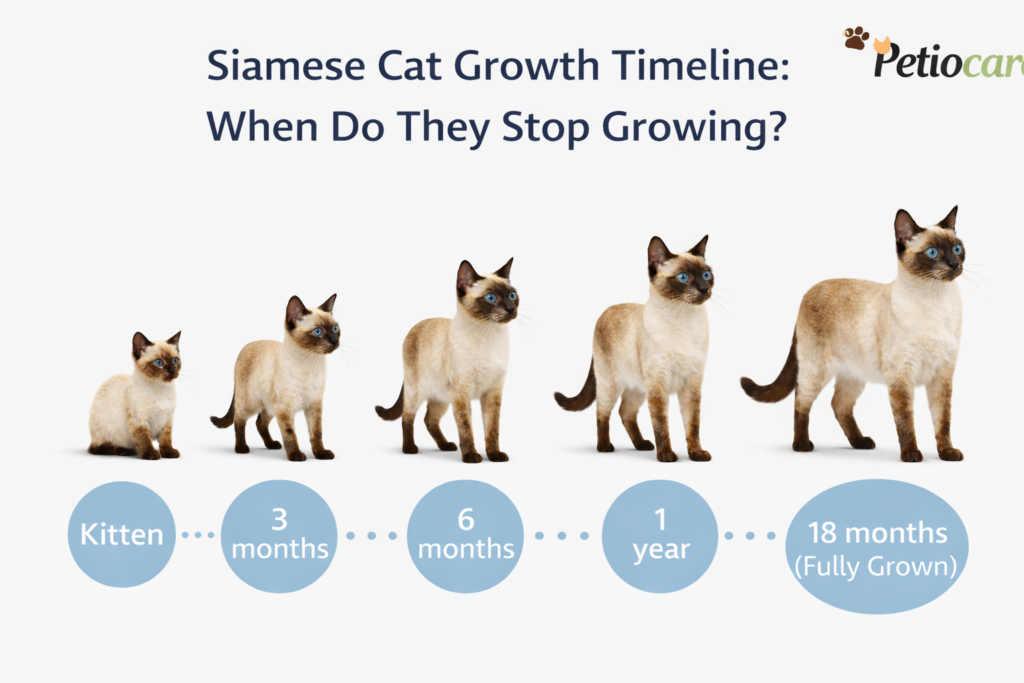
Siamese cats have a naturally lean, fine-boned body that makes them look sleek and elegant. Their growth seems to finish earlier because of this body type.
- Most stop growing in height by 10–12 months
- Full body maturity occurs by 15–18 months
Their slim appearance can make them look smaller even when fully grown, but they are typically at a healthy and complete adult size once maturity is reached.
When Do Domestic Shorthair Cats Stop Growing?
There is no one standard breed of domestic shorthair cat, so they come in many different types. Instead, they are a mix of different genetic backgrounds, which means that each cat’s growth pattern can be very different.
Most domestic shorthair cats grow in a certain way, but how they grow depends a lot on their genetics and how well they are cared for as kittens.
- Most reach full visible size between 12–18 months
- Muscle development may continue slightly beyond the first year
- Genetics strongly influence height, weight, and body shape
- Nutrition during kittenhood affects final size and strength
This group shows the widest variation among domestic cats, which is why some shorthairs mature quickly while others continue subtle growth well into their second year.
Bengal Cat Growth Timeline: When Do They Stop Growing?
Bengal cats are naturally strong and agile, and their bodies are built for strength and agility rather than bulk. They often grow in stages, which can make them look fully grown even though they aren’t.
- Height growth usually ends around 12–14 months
- Muscle development continues until 18–24 months
Because of their active nature, Bengals often look lean in their first year, then gradually develop a more powerful and defined body as their muscles mature.
When Do Siberian Cats Stop Growing?
People know that Siberian cats have strong, heavy bones and take a long time to grow up. They take longer than most other breeds to fully grow up, especially when it comes to body density and strength.
- Height usually stabilizes around 18 months
- Reaching full size can take up to 3–4 years
Even after they appear adult in size, Siberian cats continue gaining muscle mass, bone density, and overall strength, which is why their bodies feel heavier and more solid over time.
Why Some Cats Look Fully Grown Before They Are
Many cat owners think their cat has stopped growing just because changes on the outside slow down or become less noticeable. When cats are no longer kittens, they often look older before they are fully grown.
Many owners think their cat has stopped growing because:
- The coat is fully developed
- Facial features look more defined and mature
- Activity levels change as kitten energy decreases
However, these are only visual signs and not proof that the plant is fully grown. Muscle growth and bone density often keep going long after this point, especially in larger or slower-maturing breeds where growth on the inside lags behind growth on the outside.
Factors That Affect How Long a Cat Keeps Growing

A cat’s growth and development are affected by many things, and these things often work together instead of separately. This is why two cats of the same age that were raised in different places or have different genetics can look very different in size, structure, and overall maturity.
- Genetics: Size, bone structure, and growth speed often run in families
- Nutrition: A poor or unbalanced diet can delay growth or limit full development
- Spaying/neutering timing: Early procedures may slightly affect bone growth patterns
- Activity level: More active cats tend to build muscle and strength over a longer period
- Health conditions: Illness or stress during kittenhood can slow normal growth progress
All of these things work together to determine when a cat will stop growing and how long it will take them to do so. Knowing this helps owners not worry too much and helps their pets grow up healthy.
How to Tell If Your Cat Is Still Growing
It isn’t always obvious whether a cat has finished growing, especially once they start looking adult on the outside. However, there are several physical signs that can help indicate whether development is still ongoing.
Signs your cat may still be growing include:
- Gradual weight gain without noticeable fat buildup
- Increased muscle definition, especially in the legs and shoulders
- Chest or shoulder broadening over time
- Paw size still appears large compared to the rest of the body
While these signs can offer useful clues, veterinary weight and growth charts remain the most accurate way to confirm whether a cat has reached full physical maturity.
Common Myths About Cat Growth
There are many misconceptions about how and when cats stop growing. These myths often lead owners to misunderstand normal development or worry unnecessarily about their cat’s size.
Myth: Cats stop growing at exactly one year
Reality: Many cats continue developing muscle, bone density, and body mass for months—or even years—after their first birthday.
Myth: Small cats mature faster
Reality: Growth speed depends more on breed, genetics, and body structure than on overall size.
Myth: Weight gain equals growth
Reality: True growth involves skeletal structure and muscle development, not just added body fat.
Final Thoughts: Every Cat Grows on Its Own Timeline
There is no single age that applies to all cats. Some finish growing at one year, while others continue changing well into adulthood. Gender, breed, nutrition, and genetics all shape the timeline.
Understanding when cats stop growing helps you feed them correctly, monitor their health, and appreciate the slow transformation from kitten to adult, without unnecessary worry.
Your cat isn’t late. They’re just growing at their own pace
If you want to keep learning about your cats, dogs, and other pets’ health, behavior, and daily care, PetioCare has a growing library of expert-backed guides for pet parents. From nutrition tips to growth milestones and grooming advice, you’ll find everything you need to raise a happy, healthy companion.
Explore more helpful cat articles at PetioCare.
Most cats reach their adult height between 10 and 15 months, but physical development doesn’t end there. Many continue gaining muscle, body mass, and bone density until 18–24 months. Larger breeds like Maine Coons or Siberians may keep maturing for several years.
Yes. Even if a cat looks fully grown at one year, internal development often continues. They may fill out in the chest, gain muscle, and become heavier and stronger well into their second year.
In most cases, yes. Male cats usually have larger frames, thicker bones, and more muscle mass due to hormonal differences. They also tend to take longer to reach full maturity, often up to two years, while females typically finish earlier.
Your cat may still be developing if you notice steady weight increases without fat gain, broader shoulders or chest, and improving muscle definition. A veterinarian can confirm maturity more accurately using growth and weight tracking.
Large breeds take the longest. Maine Coons may need 3–5 years, and Siberians up to 4 years, while slimmer breeds like Siamese usually mature by 12–18 months.