
Dogs are more than just pets. They are true family members and loyal friends. That’s why even small changes in your dog’s health can make you worry. Many dog owners don’t realise that tumours and cancer are more common in dogs, especially as they get older.
Tumor Signs in Dogs don’t always show up all at once or in a big way. A small lump, low energy, or changes in appetite are some of the signs that are easy to miss. In other cases, your dog’s behaviour, skin changes, or unexplained weight loss may be signs that something is wrong.
This guide will teach you about the first signs of tumours in dogs, the most common signs of cancer, and when to start to worry. We will also talk about how to tell if your dog might have a tumour and when you should take them to the vet.
What Is a Tumor in Dogs? Understanding the Basics
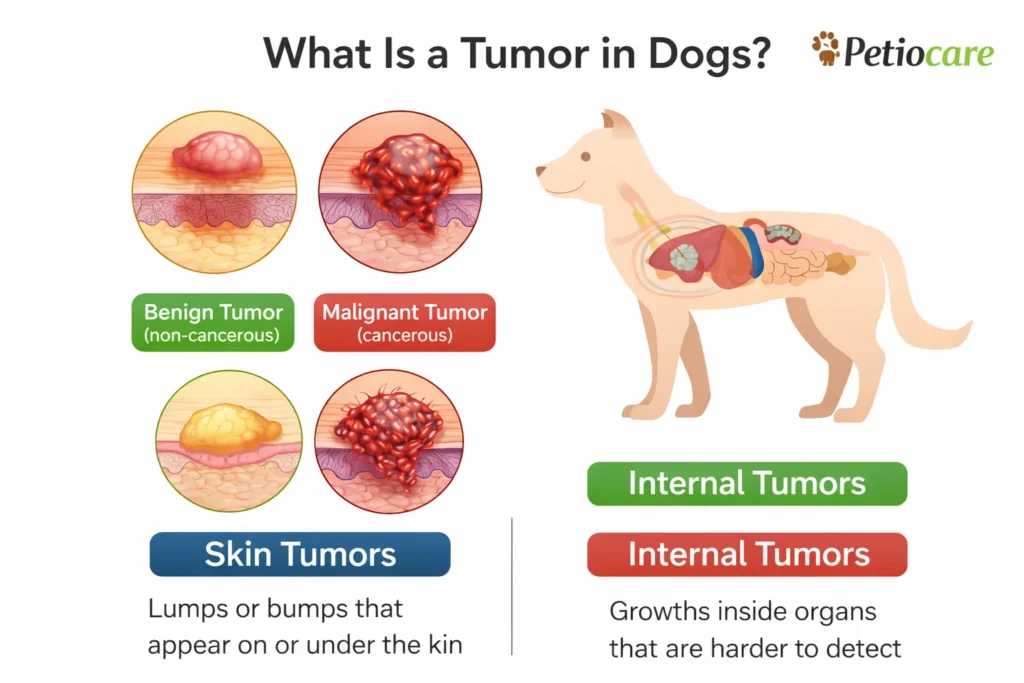
A tumor in dogs is an abnormal growth of cells that develops when normal cell activity stops working properly. Not all tumors are cancerous, but some can become harmful if they are ignored. Understanding what a tumor is can help you take early action and protect your dog’s health.
Tumors in dogs can behave differently depending on their type and location. Some are visible on the skin and easy to notice, while others grow internally and may only show subtle symptoms. This is why awareness and early evaluation are so important.
Main Types of Tumors in Dogs:
- Benign tumors are non-cancerous growths that usually grow slowly
- Malignant tumors Cancerous growths that can spread to other areas
- Skin tumors: Lumps or bumps that appear on or under the skin
- Internal tumors are growths inside organs that are harder to detect
Dogs have different types of tumours that act and affect the body in different ways, which is why it’s important to know what type of tumour you have. Benign tumours usually don’t cause any problems for a long time, but malignant tumours and growths inside the body can grow without anyone noticing.
Early Tumor Signs in Dogs You Should Never Ignore
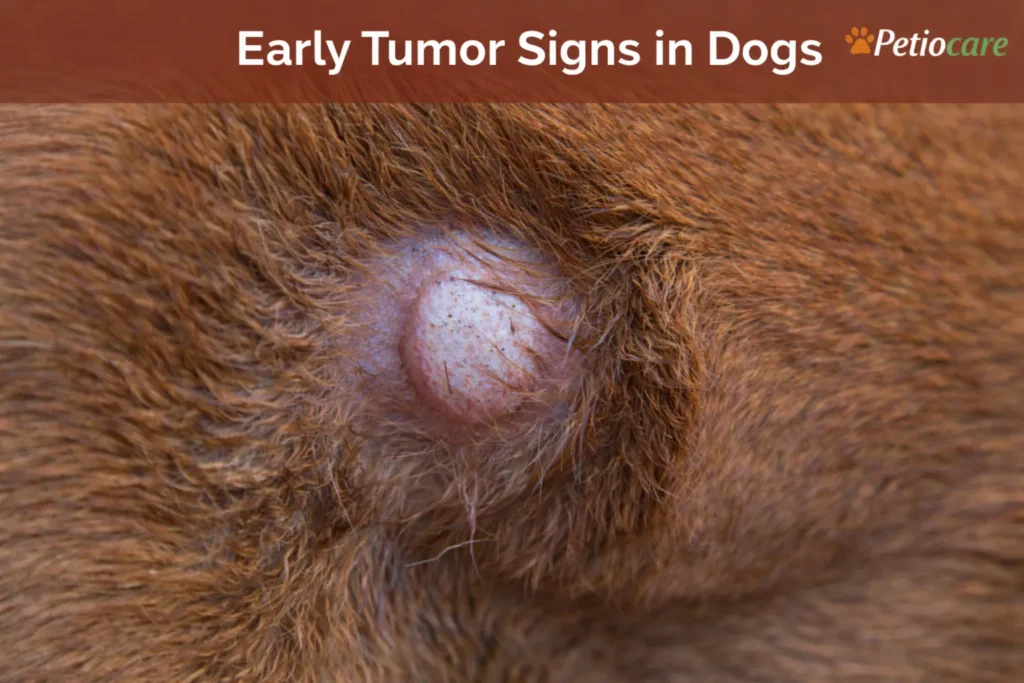
One of the most common signs of a tumor in dogs is the appearance of a new lump or bump. Not every lump means cancer, but any new or changing growth should always be examined by a veterinarian to rule out serious issues.
Early warning signs can appear on the skin or just beneath it and may develop slowly or suddenly. Paying attention to these changes can help detect problems at an early stage.
Early tumor warning signs include:
- New lumps or swelling under the skin
- Rapid growth of an existing lump
- Lumps that feel hard, uneven, or fixed in place
- Skin sores that do not heal over time
- Changes in skin color or texture
These symptoms can be the first signs of cancer in dogs, especially when they appear suddenly or continue to worsen. Early veterinary evaluation greatly increases the chances of successful treatment and recovery.
Signs and Symptoms of Cancer in Dogs
Sometimes, cancer in dogs doesn’t show up as a lump on their body. Dogs often get tumours inside their bodies that change their health and behaviour in small ways. These symptoms often come on slowly, so it’s easy to miss them at first.
For early detection, it’s important to notice both physical and behavioural changes. Changes, even small ones, that last more than a few days should be taken seriously.
Common Physical Symptoms:
- Unexplained weight loss
- Loss of appetite
- Low energy or ongoing fatigue
- Persistent pain or limping
- Swollen or bloated abdomen
Behavioral Changes
- Sleeping more than usual
- Avoiding movement, walking, or playing
- Sudden aggression or withdrawal
- Changes in bathroom habits
These signs and symptoms of cancer in dogs usually show up slowly over time instead of all at once. Regular observation and early visits to the vet are important for catching cancer before it gets worse.
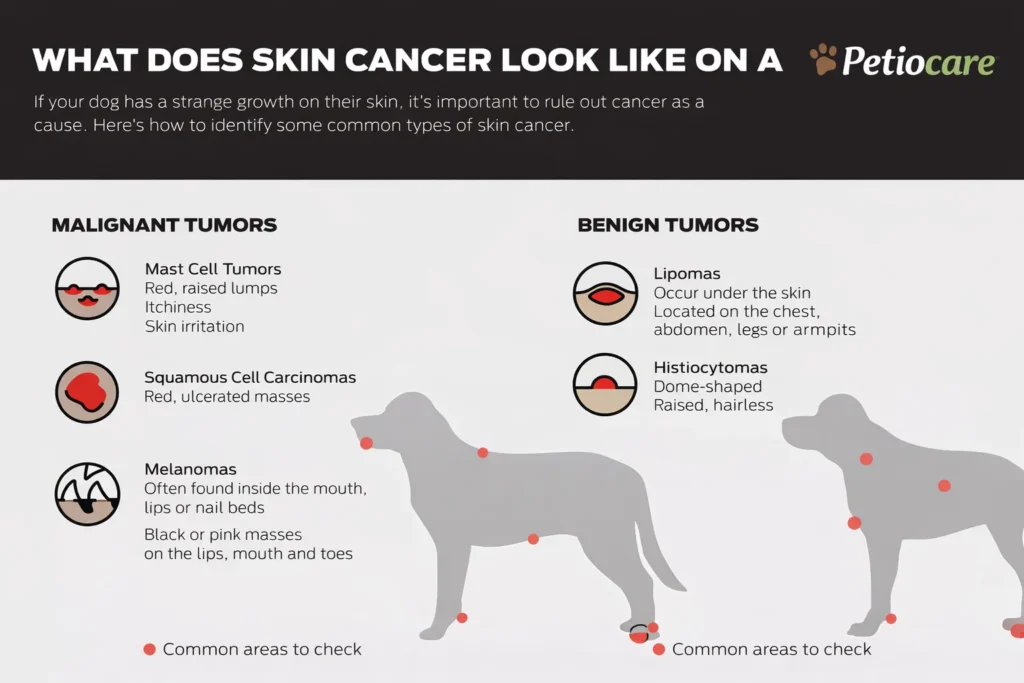
Skin Tumors in Dogs: What Do They Look Like?
These signs and symptoms of cancer in dogs usually show up slowly over time instead of all at once. Regular observation and early visits to the vet are important for catching cancer before it gets worse.
- Raised bumps or firm nodules
- Flat patches with unusual coloring
- Ulcers or scabs that bleed or do not heal
- Thickened, rough, or crusty areas of skin
Many pet owners search for early-stage dog skin cancer pictures to compare visible changes. Pictures can help you understand what’s going on, but only a vet can tell for sure whether a skin growth is cancerous.
Hidden Cancer Symptoms Most Dog Owners Miss
Some cancers grow inside the body, making them much harder to find in the early stages. These tumours inside the body might not make lumps that can be seen, but they can still cause serious health problems over time.
Pay close attention to signs that could harm your dog’s health and behaviour. People often think these symptoms are just minor illnesses, but they should never be ignored.
- Vomiting or diarrhoea that lasts a long time
- Difficulty breathing or frequent coughing
- Sudden collapse or unusual weakness
- Pale or discolored gums
- Fluid buildup or swelling in the belly
If your dog shows more than one of these symptoms at the same time, it may signal a serious condition. In such cases, an urgent visit to the veterinarian is strongly recommended.
How Do You Know If Your Dog Has Cancer?
A lot of dog owners want to know how to tell if their dog has cancer, but there is no one sign that proves it. There isn’t always one clear sign of cancer in dogs. Instead, it often shows up as a mix of changes in behaviour, changes in physical appearance, and ongoing health problems.
If you see any of these warning signs that don’t get better over time, you should be worried:
- A lump that grows quickly or changes shape
- Ongoing pain with no clear injury
- Unusual bleeding or discharge
- Long-term loss of appetite
Early diagnosis plays a major role in successful treatment and recovery. If something feels unusual or persistent, it is always better to consult a veterinarian sooner rather than waiting.
How to Tell If My Dog Has a Tumor at Home
Dog owners can play an important role in spotting early tumor signs by regularly checking their pet at home. You can see changes before they get bad by just watching and handling them gently.
You can safely check your dog by doing these things while grooming or when things are quiet:
- Touch your dog’s body lightly with your hands
- Look at the neck, chest, legs, belly, and mouth.
- Check for swelling, hardness, or sensitivity
- Check for changes every week
Don’t worry if something seems off. Scheduling a veterinary visit is the best way to confirm whether a lump or change needs medical attention.
When Should You See a Vet Immediately?
Some symptoms related to tumors and cancer in dogs should never be ignored. There are some signs that your dog may need immediate medical care to stop the condition from getting worse.
If your dog has any of the following signs, you should take them to the vet right away:
- A rapidly growing lump
- Bleeding or open tumors
- Severe pain or ongoing limping
- Trouble breathing or labored breathing
- Sudden changes in behavior
A quick response can save a life. Bringing your dog to the vet right away gives them a better chance of getting better and helps keep them healthy in general.
Common Types of Tumors in Dogs
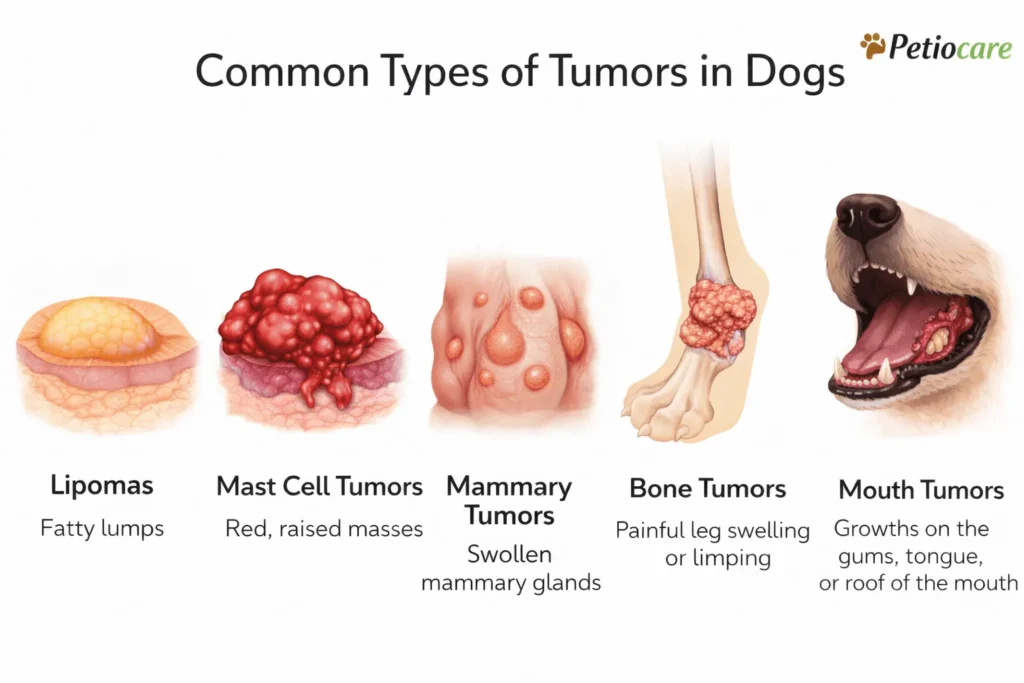
There are different kinds of tumours that dogs can get, and each one affects the body in a different way. Some tumours grow slowly and don’t hurt anyone, but others can be dangerous and need to be treated right away. Knowing the most common types can help you spot potential risks early.
Here are some of the most common kinds of tumours that dogs get:
- Lipomas, which are lumps of fat that usually aren’t dangerous
- Mast cell tumours, which hurt the skin and the immune system
- Mammary tumours, which are common in female dogs
- Bone tumours, which can hurt and make you walk with a limp
- Tumours that form in the mouth or gums
Tumours come in many shapes and sizes, and may need different kinds of care. This is why you should see a vet for a professional diagnosis to get the right care and management.
How Vets Diagnose Cancer in Dogs
Vets perform both physical exams and tests to determine whether a dog has cancer. A lot of signs of tumours in dogs can look the same, so it’s important to do the right tests to get the right diagnosis.
These tools can help vets confirm cancer and figure out how bad it is:
- Physical exams to look for lumps and check on your health in general
- Getting cell samples with a fine needle aspiration
- Testing a biopsy to get a better look at the tissue
- Finding tumours inside the body with X-rays or ultrasounds
These tests help vets determine whether a tumour is cancerous and what the best treatment for your dog is.
Treatment Options for Dogs With Tumors
Many factors affect how tumours in dogs are treated, such as the type of tumour, its size, and how much it has grown. Based on your dog’s health and diagnosis, your vet will recommend the best option.
Here are some common ways to help dogs with tumours:
- Surgery to take out the tumour
- Chemotherapy to stop or slow the growth of cancer
- Radiation therapy that destroys cancer cells
- Pain management and palliative care to help people feel better
It’s easier to treat small tumours than cancers that have already spread. The sooner you find signs of tumours in dogs, the better off they will be.
Can Tumors in Dogs Be Prevented?
You can’t stop all cancers or tumours in dogs, but you can take some things to lower the risk. It’s very important to live a healthy life and go to the vet often to catch problems early and stop them from happening.
Taking these steps can help lower the chances of dogs getting tumours:
- Scheduling regular veterinary checkups
- Maintaining a balanced and healthy diet
- Keeping your dog active and at a healthy weight
- Monitoring physical and behavioral changes as your dog ages
Early spaying or neutering may also reduce the risk of certain types of cancer. Staying proactive about your dog’s health can make a meaningful difference over time.
Conclusion
Early detection of tumor signs in dogs can truly save lives. Dogs cannot tell us when something feels wrong, which is why careful observation and quick action are so important. Noticing small changes can have a big impact on how well treatment works and on your long-term health.
If you’re ever worried about your dog’s health, trust your gut and see a vet. Early detection is still one of the best ways to keep your dog healthy and give them the best life possible.
Explore more expert-written pet care guides, health tips, and trusted advice at PetioCare to keep your furry friend happy and healthy.
Early signs of cancer in dogs include new lumps, weight loss, low energy, loss of appetite, and sores that do not heal.
No, many dog lumps are harmless, but any new or growing lump should be checked by a veterinarian.
Yes, dogs can live with benign or early-stage tumors, but cancerous tumors need veterinary treatment.
Benign tumors usually grow slowly, while cancerous tumors can grow quickly over weeks or months.
Signs include lumps, swelling, unexplained pain, weight loss, or ongoing fatigue in dogs.
Dogs may become less active, sleep more, avoid movement, or show signs of pain.
Cancerous tumors often feel hard, uneven, and fixed in place rather than soft or movable.