Teaching your dog to walk on a leash is one of the most valuable skills it can pick up. Whether it is a leash-pulling issue with a dog with some maturity under its collar or a joyous, bouncy puppy, proper leash-walking training makes on-leash ambulation a safe and pleasurable experience.
This comprehensive 2026 guide takes a positive and scientifically proven approach to walking leash training for dogs. This guide is superb for all dogs, no matter how common leash issues can arise, such as stubbornness, reactivity, and distraction.
How Does This Guide Define Leashing Training and Its Importance?
Leash training means teaching your dog to walk beside you with a loose leash without pulling, lunging, zigzagging, or stopping unexpectedly. Dogs aren’t born knowing leash manners; they learn them through structure, consistency, and positive reinforcement.
Benefits of Proper Leash Training
- Safety: Prevents running into traffic or chasing animals
- Better Control: You guide the walk, not the dog
- Less Stress: Calm walks instead of daily battles
- Better Exercise: Smooth pacing improves stamina
- Stronger Bond: Walking becomes teamwork
While the same principle applies when leash training a puppy versus an adult dog: rewarding good behavior, preventing pulling, and being consistent, the methods of application are supposed to be used differently.
When to Start Leash Training a Puppy
Leash training for puppies can begin at the age of 8-10 weeks. This is the ideal age because of their ability to quickly learn new skills. Even short training sessions can be effective. Only a few minutes a day can create strong and lifelong skills.
Early training prevents:
- Pulling
- Lunging
- Fear of outdoor environments
- Leash chewing
Short, fun sessions work best for puppies, especially when you use rewards. Keeping training positive helps them learn faster and enjoy the process.
What You Need Before You Start Leash Training
Having the right gear available is critical to the effectiveness of the first step in leash training. Dogs are kept safe, comfortable, and focused while training is in progress. Here is the list of needed gear.
Essential Training Tools
- 4–6 ft flat leash
(Avoid retractable leashes — they encourage pulling) - Comfortable harness
- Front-clip for dogs that pull
- Back-clip for calm walkers
- High-value treats (chicken, beef, liver)
- Clicker or marker word (“Yes!”)
- Treat pouch for quick reward access
Harness vs. Collar
A harness is safer and prevents neck strain, especially for:
- Pulling dogs
- Reactive dogs
- Older dogs
- Puppies learning leash pressure
How to Leash Train a Dog: Step-by-Step Guide (Works for All Ages)
Various environments can be tested for calmness before starting leash training. For the first training exercises, which are essential for learning basic cues, it is recommended to use indoor areas where the dog can learn calmness and basic movements before encountering outside stimuli. To prepare to start outside calmness training and to build the loose-leash walking foundation, the following exercises can be done. The foundation exercises can work with any dog, whether a puppy or an adult.
Step 1: Bring the leash and harness inside.
Let your dog get used to the leash and harness in a calm, quiet place before you take them for a walk. Let them smell and look around the equipment so they feel safe and not scared. This helps you make a good connection before you clip it on.
How to do it:
- Let your dog smell the harness and leash.
- Gently put on the harness.
- Clip the leash and give a treat
- Give treats to make a good connection.
Pro Tip: If your dog is hesitant, use a treat to get them to put their head through the harness.
Step 2: Teach your dog how to walk on a loose leash inside
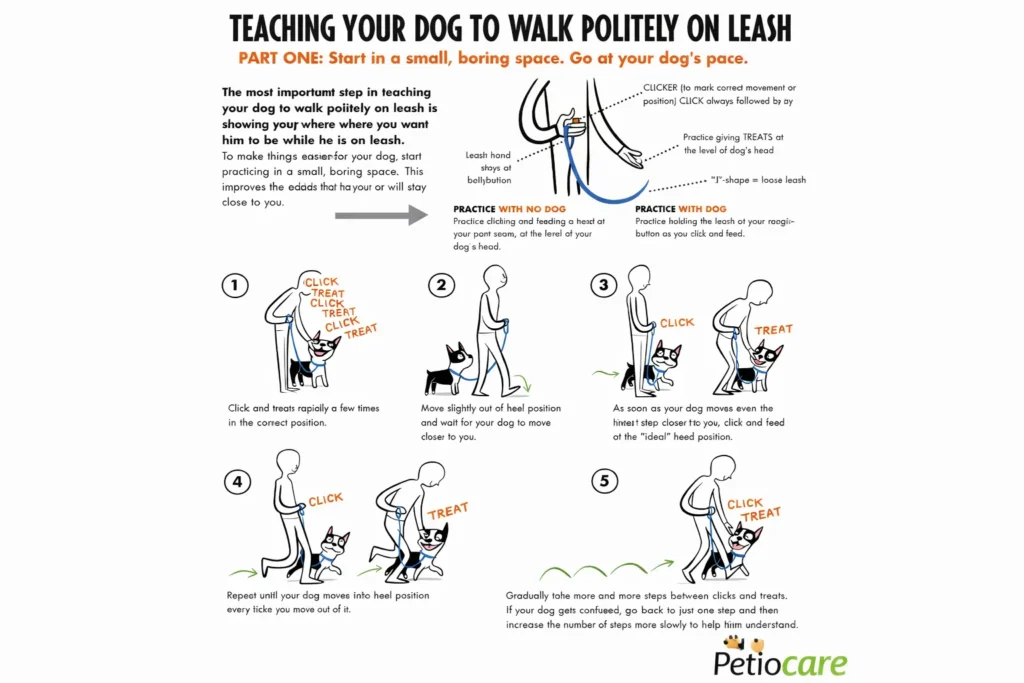
Indoor sessions for teaching loose-leash walking are great for getting your dog to pay attention without any outside distractions. This stage is also the first step in teaching hand delivery because the dog is rewarded for staying close by.
Practice this:
- Take one step
- When your dog follows without pulling → mark and reward
- Repeat in different directions
- Reward your dog when it stays beside your leg
Your dog learns:
“Staying close gets rewarded.”
This is the foundation of teaching a dog to walk on a leash.
Step 3: Choose a Side and Stay Consistent
Choose one side of your body for your dog to walk by and be consistent with that side. Keeping consistent with your dog on which side to walk will help give your dog boundaries and help prevent confusion and zig-zagging.
If your dog switches sides:
- Pause
- Step around them
- Guide them back
- Start walking again
Consistency prevents zigzagging.
Step 4: Slowly Increase Walking Distance
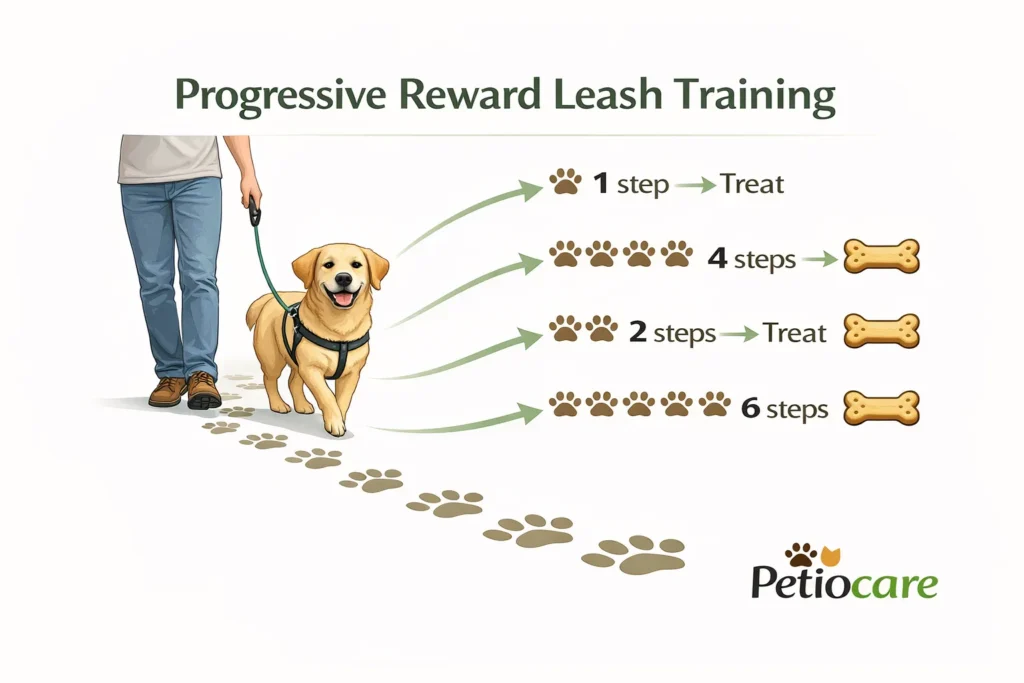
Increase the number of steps before rewards to build focus.
Example reward pattern:
- 1 step → treat
- 4 steps → treat
- 2 steps → treat
- 6 steps → treat
This keeps your dog motivated and eager to stay close. It also prevents them from expecting a treat for every single step.
Step 5: Indoor Bigger Space Walks
Once your dog seems to enjoy the walks on the leash around the smaller areas, you can start to move to larger areas. The dog will have new experiences with the room’s increased space, different floors, and a few things to pay attention to while staying on task.
Increase the challenge by using:
- Hallway
- Living room
- Entire house
- Backyard
Practicing in new spaces helps your dog stay attentive and calm. It also strengthens their leash manners and confidence in different environments.
How to Train a Dog to Walk on a Leash Outdoors
Move outdoors only after your dog has mastered leash walking indoors. Start in quiet, low-distraction areas to help them adjust gradually:
Start in quiet, low-distraction areas:
- Backyard
- Empty parking lot
- Quiet street
- Calm park corner
Use high-value treats to keep your dog focused, as outdoor environments have many distractions.
Gradually Add Distractions
Once your dog is comfortable, slowly introduce distractions and reward calm behavior around:
- Other dogs
- People
- Cars and bikes
- Birds and small animals
- Kids playing
Always begin at a distance where your dog can remain calm and confident, gradually decreasing the distance as they improve.
How to Leash Train a Reactive Dog
Reactive dogs may bark, lunge, or panic when they encounter people, other dogs, or sudden movements. Their reactions are often driven by fear, excitement, or frustration.
Training Tips:
- Keep a distance from triggers, start far enough that your dog remains calm
- Use high-value treats to reinforce focus and positive behavior
- Reward looking at you instead of reacting to distractions
- Avoid scolding, as it can increase fear or aggression
- Keep sessions short and calm to prevent overwhelm
This approach is also effective for leash training aggressive or fearful dogs, but severe aggression should always be managed by a certified trainer.
How to Leash Train an Older Dog
Older dogs absolutely can learn leash manners, but they may need more patience and slower, gentler steps. Past habits, physical limitations, or anxiety can make the process take longer than with puppies.
Challenges Older Dogs Face
- Long-term pulling habits
- Anxiety or fear from past experiences
- Low confidence
- Joint stiffness or arthritis
Training Tips
- Start indoors to create a calm learning environment
- Use soft treats that are easy on their teeth
- Walk slowly and allow breaks as needed
- Use a padded, no-pull harness for comfort and safety
- Give frequent breaks to prevent fatigue or stress
- Keep sessions predictable so your dog feels secure
Gentle, consistent practice works best and helps older dogs build confidence while improving leash manners.
How to Stop Leash Pulling in 5 Minutes (Quick Method)
One of the most common questions dog owners ask is how to stop leash pulling quickly, and the good news is, it can be done with a simple, consistent method.
The Stop-and-Stand Technique
- Dog pulls → STOP immediately
- Stand still and say nothing
- When your dog returns or loosens the leash → reward immediately
- Resume walking
Your dog quickly learns:
“Pulling stops the fun. Staying close keeps the walk going.”
With consistent practice, leash pulling can decrease dramatically in just a few sessions.
How to Stop a Dog From Pulling on a Leash (Detailed Fixes)
Leash pulling can have several causes, from excitement to fear or stubborn habits. Understanding why your dog pulls helps you address the behavior effectively.
Common Problems and Fixes
If your dog lunges at people or dogs:
- Increase distance
- Say their name happily
- Reward eye contact
- Move away if needed
If your dog bites or chews the leash:
- Release tension
- Redirect with movement
- Reward when the leash is ignored
If your dog refuses to walk:
- Use a happy voice
- Reward tiny steps
- Avoid dragging
- Identify fear triggers
By addressing each issue calmly and consistently, you can reduce pulling and make walks enjoyable for both you and your dog.
Long Leash Dog Training (Bonus Method)
Using a 10–30 ft longline leash gives your dog more freedom while keeping them safe and under control. This method is especially helpful for building confidence, practicing recall, and reducing frustration during training.
Benefits of a Long Leash
- Explore safely
- Practice recall
- Build confidence
- Reduce frustration
Start in a calm space, and be sure to reward for quiet, calm, and focused behavior.
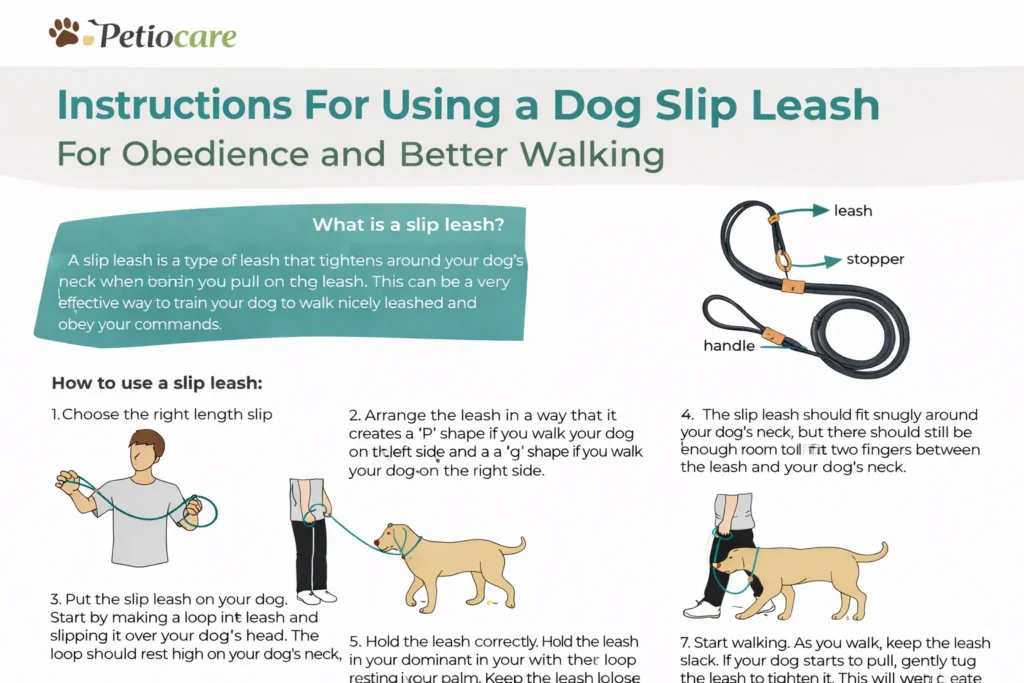
When is Slip Leash Training Appropriate?
When used thoughtfully, a slip leash can be a good tool to control a dog’s training. However, they are not recommended for extended walks because of the control they provide and the snap at the dog’s neck.
When a Slip Leash Is Useful
- Quick on-and-off use
- Training dogs that slip out of harnesses
- Rescue or shelter dogs
Do not use slip leashes on dogs that pull hard. Use slip leashes with caution and close supervision to avoid possible tightening that could cause harm.
Most Appropriate Leashes and Harnesses for Training
Getting the proper training equipment can help ensure that training sessions with a lead remain easy and safe for both the owner and the pet. When combined, the correct harness and lead help contour the pet to prevent them from being able to pull toward distracting stimuli while increasing the handler’s control and comfort in the situation.
Recommended Options
- Flat leash: ideal for everyday training and control
- Front-clip harness: helps reduce pulling and encourages walking by your side
- Longline leash: perfect for recall practice and building confidence
Avoid retractable leashes during training, as they encourage pulling and reduce your control.
Conclusion
Desensitization to leash training doesn’t have to be seen as a conflict. Gradually ease your dog into situations by using a reward system with no punitive action to train your dog to walk on a leash without agitation and to stay beside you with a relaxed attitude and confidence.
Although your dog might have grown or exhibited a different temperament, any dog can learn how not to pull on a leash walk. Any dog can learn to walk decently beside you without conflicts with some training and positive reinforcement. Your dog will become much more relaxed and comfortable with your surroundings.
If you stay consistent and keep the experience enjoyable, you’ll be amazed at how quickly your dog picks it up.
The fastest way to leash train a dog is to start indoors, reward loose-leash walking instantly, and stop moving when pulling starts. Short daily sessions with treats show results quickly.
The 7-second rule is a hot weather safety test for dog walks. If you can’t comfortably hold the back of your hand on the pavement for 7 seconds, it’s too hot for your dog’s paws and can cause burns. In hot conditions, walk your dog on grass, choose shaded areas, or go out early morning or late evening when the ground is cooler.
Most dogs learn basic leash manners in 2–6 weeks, depending on age, consistency, and previous habits.
To train a dog, stop walking the moment your dog pulls. Only move forward when the leash loosens, and reward calm walking immediately.
The 1/2/3 dog training method is a structured reward system that helps build focus and predictability during walks:
Count your steps aloud: “1…2…3”
Reward your dog on “3” if the leash is loose
This method helps dogs stay engaged, reduces anxiety, and prevents pulling by giving them a clear expectation of when rewards happen.
Train in low-distraction areas first, reward loose leash walking, and gradually introduce outdoor distractions while staying consistent.
Leash training usually takes a few weeks of daily practice, but steady improvement can be seen within days if training is consistent.