If you find a minor bump or pimple on your dog’s face, it can be scary, especially if it comes out of nowhere or looks painful. Many pet owners immediately think, “Is this serious, or is my dog just uncomfortable?” The good news is that dog pimples are common and usually not dangerous, especially in puppies and young dogs.
Dogs can get pimples, just like people do. They usually appear on the chin, lips, and muzzle, but they can also appear on the belly, back, or stomach. Most of the time, dog pimples go away on their own, but sometimes they need treatment or a trip to the vet.
Can dogs get pimples?
Yes, dogs can get pimples, but most of the time they don’t hurt when hair follicles get clogged with oil, dirt, or dead skin cells; dog pimples form. They usually appear on the chin, lips, and muzzle, but they can also appear on the belly or back.
You need to know the difference between simple dog pimples and more serious skin problems. Pimples are usually small bumps that only happen in one place, but infections, parasites, or skin problems related to the immune system tend to spread, get worse quickly, or hurt a lot. Teenagers and puppies both get pimples more often because their bodies are getting used to changes in hormones.
What Are Dog Pimples (Canine Acne)?
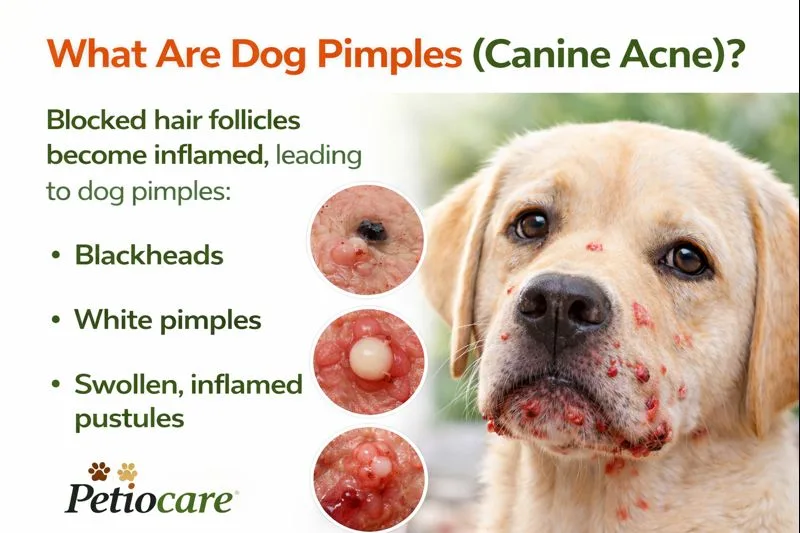
Dog acne, or dog pimples, is a skin problem that causes the hair follicles to swell. Most of the time, they show up on short hair that touches things a lot.
When hair follicles get blocked, they get inflamed and make dog pimples. They can look like blackheads, whiteheads, or inflamed pustules.
- Blackheads are dark spots in clogged pores.
- White pimples are little bumps that are full of pus.
- Pustules that are red, swollen, and sometimes painful.
Most dogs with canine acne have a mild case that doesn’t cause major problems and usually gets better on its own. But if bacteria get through the damaged or irritated skin, the pimples can get infected. This can cause redness, swelling, or even pus to form. In these situations, medical help may be needed to stop more problems from happening.
What Causes Dogs Get Pimples?
Dog pimples occur when hair follicles get clogged, hormones change, the skin gets irritated, or the dog has allergies. Puppy acne is common during puberty due to hormonal changes. Adult dogs can also get pimples from plastic bowls, repeated skin damage, or skin conditions that are already there.
Genetics, hormones, and environmental factors can all cause dog pimples. Finding out what caused something helps you manage it better.
Changes in hormones
Acne in dogs is very common between the ages of 5 and 8 months, when hormonal changes cause the skin to produce more oil. As the dog gets older, these puppy pimples usually go away on their own.
Genetics and breed predisposition
Some dogs are more likely to get pimples due to their genes. This is especially true for short-haired or wrinkled breeds like
- Boxers
- Bulldogs from England and France
- Big Danes
- Weimaraners
- Dog Pinchers
- Rottweilers
Damage to the Skin
Repeated irritation can cause pimples, such as:
- Eating out of plastic bowls for food or water
- Rough play or rubbing on the chin
- Too much scratching or rubbing
- Allergies and Skin Conditions That Are Already There
Pimples can be caused by food allergies, environmental allergies, parasites, or bacterial infections. In these cases, acne might not be the main problem.
Areas Where Dog Pimples Are Common
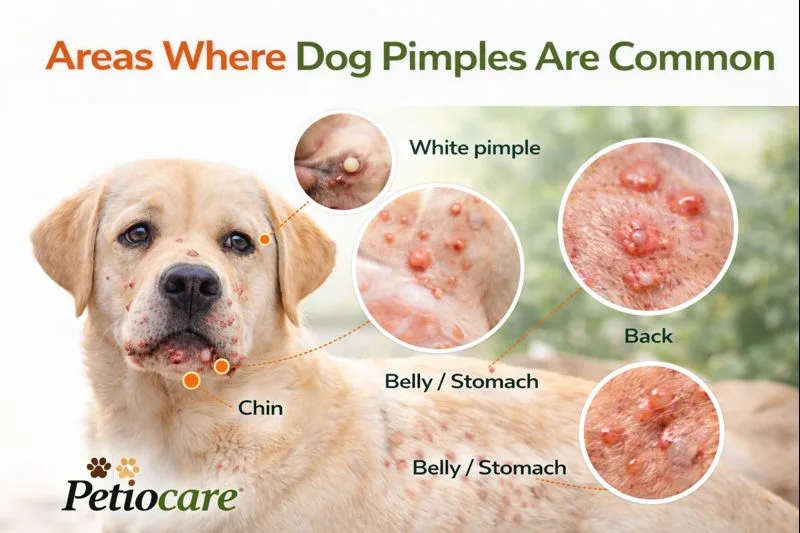
Dog pimples can appear in different places on the body, and where they appear depends on what’s causing them. Some areas are more likely to experience this due to friction, contact with surfaces, or oil buildup. Pet owners can find and treat pimples early if they know where they usually show up.
Dog Pimples on Chin
This is the most common location. The chin comes into contact with bowls, floors, and toys, making it prone to irritation and clogged pores.
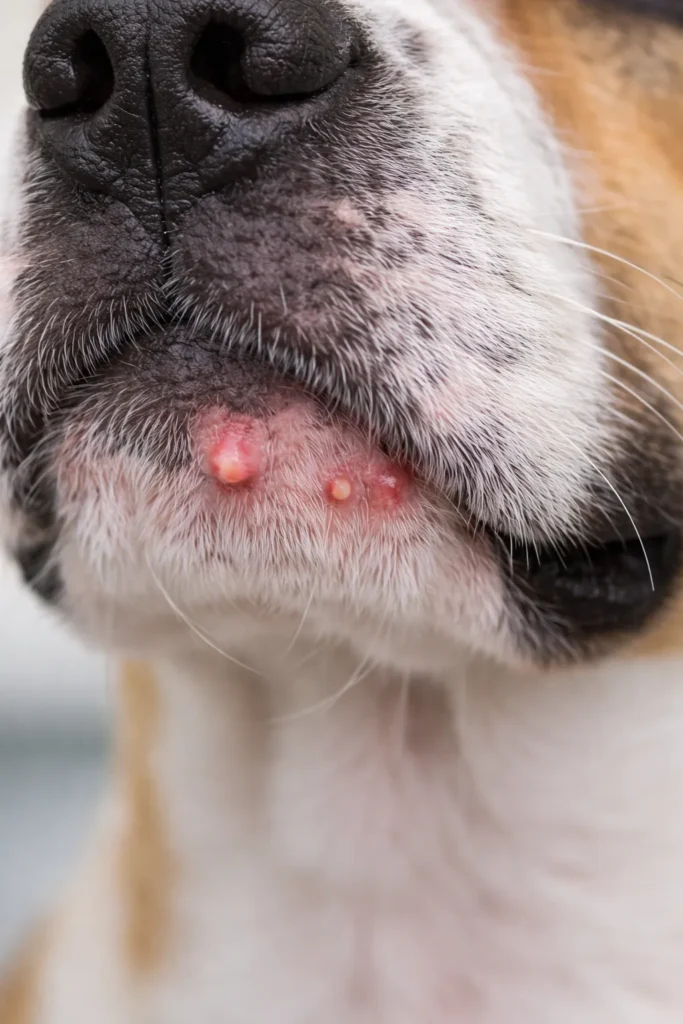
Dog Pimple on Lip
A pimple on a dog’s lip may look alarming, but it is often harmless. However, painful lip pimples can interfere with eating and should be monitored closely.
White Pimple on Dog
A white pimple usually contains pus. These should never be popped, as doing so can cause infection or scarring.
Dog Pimples on Belly / Stomach
Dog pimples on the belly or stomach may be caused by contact allergies, grass irritation, or bacterial buildup on thin skin.
Do Dogs Get Pimples on Their Back?
Yes, dogs can get pimples on their back, though it’s less common. Back pimples are often linked to allergies, parasites, or clogged follicles under dense fur. These pimples may be harder to notice because of the thick coat, so regular grooming is important. Persistent bumps on the back should be monitored closely, as they could indicate an underlying skin issue that needs veterinary attention.
Signs and Symptoms of Dog Pimples
There are a few common signs to look for when your dog has pimples, but some of the most obvious ones can be different. These include small bumps, whiteheads, or blackheads on the skin. You can keep the problem from getting worse by watching for these early signs. Bumps, whiteheads, or blackheads that are small
- Swelling or redness
- Scabbing or forming a crust
- Rubbing the face on furniture
- Slight itching or pain
If the pimples hurt, bleed, or spread quickly across the skin, it could be a sign of an infection. Pimples that are infected can make your dog red, swollen, and hurt. A veterinarian should look at these cases to make sure they get the right treatment and avoid more problems.
Acne in puppies and acne in adult dogs
Puppy acne is usually temporary and related to hormones. Allergies, trauma, or skin conditions that are already there are more likely to cause adult dog acne. Puppy acne usually goes away on its own.
Adult acne can come back and needs to be treated.
It’s important to see a vet if your dog still has acne after the puppy stage. If you have persistent pimples, it could be a sign of a skin problem or infection that needs to be looked at by a doctor. Getting advice from a vet early on can keep your dog’s skin healthy and stop problems from getting worse.
How Vets Diagnose Dog Pimples?
Veterinarians usually start by looking at your dog’s skin and hair to find pimples and see how bad they are. If you have pimples that won’t go away, are getting worse, or are spreading, your doctor may suggest more tests to find out what’s causing them.
- To rule out mites, skin scraping
- Cytology (checking cells for infection)
- Biopsy (in rare cases)
These tests can help tell the difference between regular acne and other skin problems that may look like it, like infections, allergies, or parasite infestations. A correct diagnosis makes sure that your dog gets the best care possible.
How to Treat Dog Pimples: What Your Vet Can Do
How nasty the dog’s pimples are usually determines how they are treated. If the pimples are mild, they may only need topical care. If they are more serious or infected, a veterinarian may need to prescribe stronger medications. Choosing the right treatment helps avoid problems and speeds up healing.
- Benzoyl peroxide products that are safe for dogs
- Antibiotics that go on the skin
- Taking medicine by mouth for an infected acne that is infected
Never use acne treatments made for people on dogs. These products may have ingredients that are poisonous or too harsh for the skin. They could cause irritation, burns, or make the condition worse . Always use dog-specific products that a veterinarian has approved.
Always follow veterinary instructions when using medicated shampoos or antibiotics, as incorrect use can worsen skin irritation or delay healing.
How to Take Care of Dog Pimples at Home
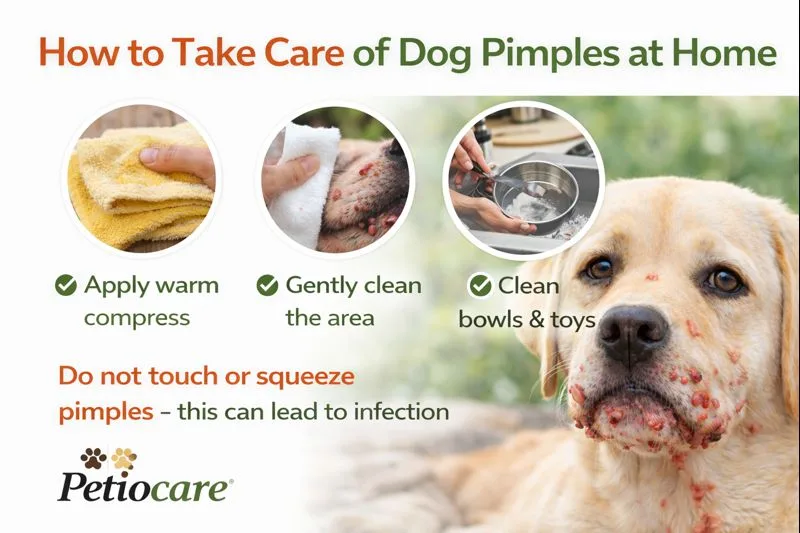
Following a few simple steps at home can help your dog’s pimples heal more quickly. These habits help keep your skin healthy, lower irritation, and stop infections. Taking care of your dog at home regularly can make a big difference in how comfortable and quickly they heal.
- Putting on a warm compress
- Gently cleaning the area that hurts
- Cleaning up bowls and toys
You shouldn’t touch or squeeze your dog’s pimples because this can push bacteria deeper into the skin. Doing this could lead to an infection, more swelling, or even permanent scarring. Let the pimples heal on their own or with the help of a vet.
Can you pop a dog’s pimple?
No, you should never pop a pimple on a dog. Popping can push bacteria deeper into the skin, increasing the risk of infection, inflammation, and permanent scarring. Instead, keep the area clean and see a vet if the pimple gets worse.
How to Stop Dog Pimples?
To keep your dog from getting pimples, keep their skin clean and avoid things that can irritate it or promote bacterial growth. Making small changes to your daily care and hygiene can greatly lower your risk of getting pimples. Regular preventive care keeps your dog’s skin healthy and comfortable.
- Use bowls made of ceramic or stainless steel.
- Regularly wash your dog’s face.
- Keep up a good grooming routine.
- Eat well to help your skin stay healthy.
These steps not only reduce the risk of pimples but also make your skin and coat healthier overall. Keeping your dog’s space clean and grooming them often will help them stay healthy and comfortable in the long run.
When Is It Time to Go to the Vet?
Call your vet if your dog’s pimples hurt, bleed, or don’t get better. If lesions spread quickly or cause visible pain, you should see a doctor right away. Taking your dog to the vet early can help them heal quickly and keep them from getting sick.
- Pimples hurt or bleed.
- After 1–2 weeks, the lesions don’t get better.
- It looks like your dog is in pain.
- Pimples spread quickly
Keeping a close eye on these warning signs makes sure that any serious problems are dealt with right away. Taking your dog to the vet on time can help them heal faster, avoid problems, and feel better.
Can dog pimples spread?
No. Dog pimples can’t spread to other dogs or people. You don’t have to worry about them spreading by touch.
Is it normal for puppies to have acne?
Yes, puppy acne is normal and happens a lot in dogs between the ages of five and eight months. Hormonal changes can cause the skin to make more oil during this time. This can block hair follicles and cause small pimples or whiteheads, especially on the chin and muzzle.
Most of the time, puppy acne is not serious and will go away on its own as the puppy gets older. You may notice a few bumps, slight redness, or tiny pustules, but they rarely cause serious discomfort.
What you can do:
Use a gentle wipe or a vet-approved cleaner to keep the area clean. Don’t pop or squeeze the pimples.
Look for signs of infection, like swelling, bleeding, or pus.
If the acne looks bad, lasts longer than your puppy’s first year, or makes your puppy feel bad, talk to a vet about safe ways to treat it.
Conclusion
Dog pimples may look bad, but most of the time, they are just a normal skin problem that can be treated. You can keep your dog healthy and happy by knowing what makes them sick, looking for signs, and keeping them clean. Your vet is always the best person to ask if you don’t know what to do.
Most dog pimples are not dangerous and usually clear up on their own with basic care and good hygiene. They often occur due to clogged pores, mild irritation, or hormonal changes, especially in puppies. However, if pimples become red, painful, swollen, or start oozing pus or blood, it’s best to consult a vet as this may indicate an infection.
Most dog pimples are not painful and only cause mild discomfort. However, if they become swollen, red, or filled with pus, they can start to hurt. Dogs may rub their face on furniture or seem irritated, which is a sign the area is bothering them.
If pimples keep coming back, there’s usually an underlying reason. Common causes include allergies, dirty food bowls (especially plastic ones), poor grooming, or skin sensitivity. In some dogs, food reactions or environmental allergens can also trigger repeated breakouts.